
Criteria 5.1 สภาวะแวดล้อมด้านบุคลากร (WORKFORCE Environment)
Requirements
Quality level assessment

Result 5.1
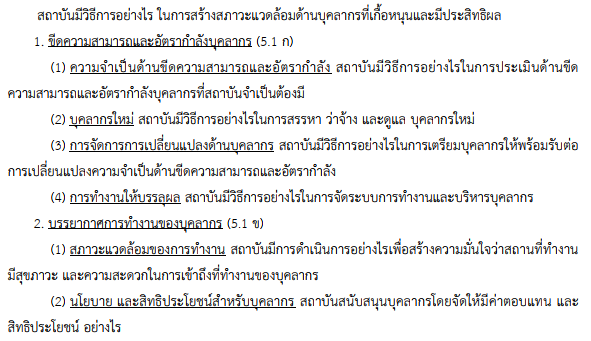
1. ขีดความสามารถและอัตรากำลังบุคลากร (5.1 ก)
The Faculty fosters a supportive and productive workforce environment. The Dean entrusts the Policy and Planning Committee with overseeing and managing this environment under their direct supervision. To ensure systematic management, workforce policies and plans are implemented to develop the competencies of both academic and support staff, thereby effectively optimizing capability and capacity.
Furthermore, to maximize effectiveness, the Faculty ensures staff well-being, workplace security, and accessibility, alongside providing comprehensive benefits. This fosters a high quality of life and strong organizational engagement, inspiring staff to dedicate their full knowledge and capabilities to their work. Consequently, their efforts align seamlessly with the Faculty’s vision, mission, values, and organizational culture, driving the institution to achieve its strategic goals.

The Faculty has established the five–year
Personnel Development plan to assess workforce capability and capacity. However, this plan does not account for unexpected events like
staff resignations or role mismatches. As a result, when
such changes arise, the Dean and the Policy and Planning Committee convene to
address and manage the situation accordingly.
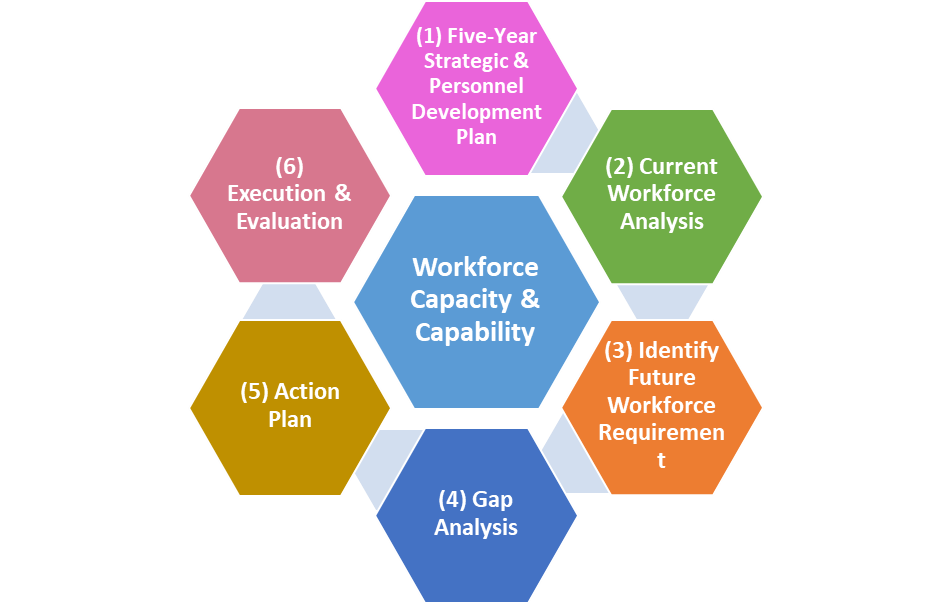
The Dean and the Policy and Planning Committee collaboratively developed a structured process to analyze and determine workforce capability and capacity (as illustrated in the graphic above).
1. Five-Year Strategic and Personnel Development Planning
The Faculty operates on an annual strategic planning cycle aligned with its Five-Year Strategic and Personnel Development (2025–2029), which addresses both capacity and capability:
- Workforce Capacity: The Faculty projects the required number of lecturers annually based on anticipated student enrollment. For example, to maintain balanced and optimal teaching hours, the Faculty scheduled the recruitment of two additional lecturers in 2025—one for the BE program and one for the CA program.
- Workforce Capability: The plan outlines a structured timeline for faculty member development. This includes supporting them in pursuing doctoral degrees, conducting impactful research, producing academic work, and applying for academic titles.
2. Current Workforce Analysis
To effectively navigate unexpected organizational changes, the Faculty regularly reviews its current workforce data. For instance, during the 2025 academic year, the resignation of a faculty member from the BE program impacted both workforce capacity and capability. In response, the Faculty assessed the situation and coordinated with the Office of the President to recruit a qualified replacement. This strategic intervention successfully integrated a new lecturer who has now assumed full teaching duties and responsibilities.
3. Forecasting Future Workforce Needs
The Faculty proactively reassesses its long-term staffing requirements. These projections are integrated into the Five-Year Personnel Development Plan (2025–2029), which specifies the required annual headcount for both lecturers and support staff. Beyond capacity, this plan redefines the core competencies and desired capabilities required of both current personnel and future hires.
4. Gap Analysis
To build a robust workforce strategy, the Faculty conducted a comprehensive gap analysis. This process evaluates current workforce skills against the competencies required to achieve strategic objectives, highlighting deficiencies in both capacity and capability.
- Addressing Capacity: The Faculty is actively filling vacancies caused by resignations with qualified new talent.
- Enhancing Capability: The Faculty has launched annual projects dedicated to upskilling and reskilling existing personnel to meet the strategic goals in the five-year plan.
5. Action Planning
The Faculty has established a structured workforce action plan designed to assess current staffing, identify performance barriers, define future benchmarks, and outline clear operational strategies. Currently, an interim action plan is underway, with the Policy and Planning Committee working alongside Program Chairs to source and recruit qualified external candidates to eliminate remaining capacity gaps.
6. Execution and Evaluation
While the Faculty has successfully executed core components of the five-year strategic plan—particularly in hiring highly qualified lecturers—unforeseen challenges like subsequent resignations and fluctuating student enrollment still impact capacity and capability. To mitigate these risks, the Faculty has launched long-term workforce development initiatives. The cornerstone of these efforts is a continuous reskilling and upskilling program, ensuring current staff remain fully equipped to support the Faculty’s evolving mission and strategic goals.
หลักฐาน
| รหัสหลักฐาน | ชื่อหลักฐาน(พร้อมแนบลิ้งค์) |
| 5.1.1 (1) -1 | แผนบริหารและพัฒนาบุคลากร แผน 5 ปี |
| 5.1.1 (1) -2 | โครงการพัฒนาศักยภาพทางการสอนของอาจารย์ |
| 5.1.1 (1) -3 | รายชื่ออาจารย์ประจำหลักสูตรที่เปลี่ยน |

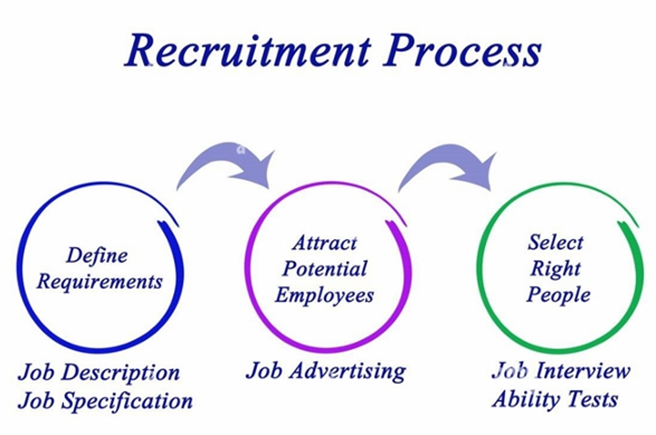
To recruit new staff, the Faculty adheres to the five-year personnel development plan, which outlines the required number and qualifications of new lecturers. In urgent cases, such as a lecturer’s resignation, the Dean and the two program chairs met to discuss the quality of the replacement and promptly notified the University’s administrative office to initiate the recruitment process for a suitable replacement.
The Faculty conducts recruitment, hiring, and supervision of new staff in accordance with the University’s regulations.
- The Faculty first defines the qualifications needed for the lecturer position.
- The University’s public relations office then announces the vacancy and required qualifications on the official website.
- A selection committee, appointed by the University’s administrative office, interviews the applicants.
- The selected candidate is offered a position by the University, based on a formal employment contract.
- The Faculty provides an orientation for the new lecturer, which covers:
- Assigned roles and responsibilities
- A thorough overview of the program curriculum
- Information about rights, benefits, welfare, and opportunities for professional development
- The code of conduct expected of all University members
- Guidance on using the Management Information System (MIS), including its benefits for teaching and academic tasks
As an international institution, the Faculty often recruits lecturers—particularly for the BE program—from diverse racial and cultural backgrounds. To promote a harmonious work environment, the Faculty emphasizes inclusive practices, especially during the orientation process. This orientation helps new members become familiar with the organizational culture, allowing them to integrate it with their own cultural backgrounds.
To support retention, the Faculty assigns an experienced lecturer as a mentor to guide new hires in adjusting to their new environment and engaging with the institutional culture. Additionally, providing clear and transparent information about rights, benefits, and professional development opportunities further strengthens the Faculty’s efforts to retain new members.
Retention Strategy

หลักฐาน
| รหัสหลักฐาน | ชื่อหลักฐาน(พร้อมแนบลิ้งค์) |
| 5.1.1 (2) -1 | ประกาศรับสมัครอาจารย์ |
| 5.1.1 (2) -2 | ปฐมนิเทศอาจารยใหม่ |
| 5.1.1 (2) -3 | Happy workplace index |

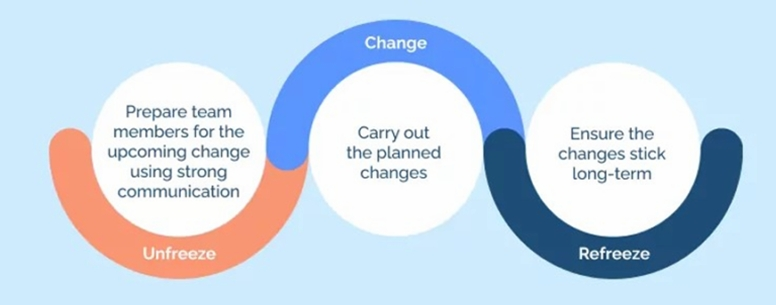
Change Management
To maintain continuity in operations and ensure the Faculty’s success, workforce capacity is managed in alignment with the five-year plan. This plan outlines the specific years in which new lecturers and staff will be recruited to match projected student enrollment and the Full-Time Equivalent Student (FTES) ratio of 1:15.
To minimize staff turnover, the Faculty offers both tangible and intangible benefits, meaningful responsibilities, and comprehensive support to foster engagement among faculty members and support staff. However, when unexpected staff reductions occur due to resignations, the Faculty promptly conducts a workforce analysis. Based on the findings, the Faculty addresses excess teaching loads by:
- Hiring qualified adjunct lecturers, and
- Reassigning surplus courses to current lecturers with relevant expertise.
The Faculty is confident in this approach, as ongoing faculty development programs
ensure that staff are well-prepared to handle diverse teaching assignments.
To prepare for anticipated changes, the Faculty continually reviews and revises workforce capacity and capability as part of the five-year strategic plan.
- Anticipating an increase in student enrollment, the Faculty is working through meetings to determine the necessary number of lecturers and support staff in the strategic plan.
- Increasing focus on projects and initiatives that reskill and upskill the current workforce to meet future demands.
หลักฐาน
| รหัสหลักฐาน | ชื่อหลักฐาน(พร้อมแนบลิ้งค์) |
| 5.1.1 (3) -1 | ค่า FTES |
| 5.1.1 (3) -2 | การจ้างอาจารย์พิเศษ (การเชิญวิทยากรมาบรรยาย) |
| 5.1.1 (3) -3 | โครงการพัฒนาศักยภาพทางการสอนของอาจารย์ (HS 08) |
| 5.1.1 (3) -4 | สิทธิประโยชน์/สวัสดิการที่อาจารย์ได้รับจากมหาวิทยาลัย |

The Faculty and its committees recognize that our workforce is central to achieving all institutional goals. As a compact unit with limited staff, the Dean manages operations by distributing responsibilities equitably among all members. Rather than following a traditional hierarchy, the Faculty utilizes a flat organizational structure to foster shared responsibility and streamline decision-making.
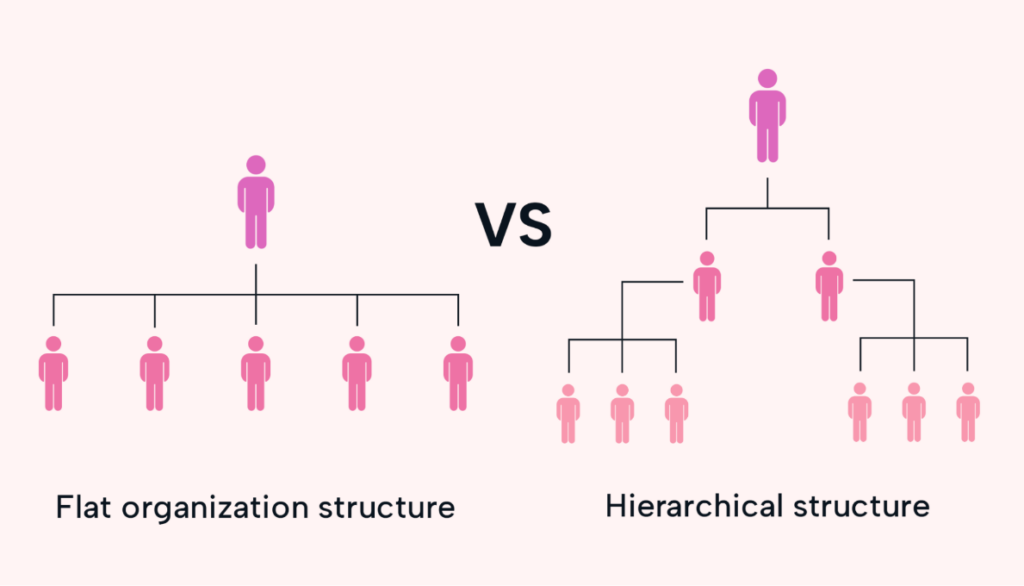
Under this flat organizational structure, the Dean and faculty communicate directly, eliminating unnecessary management layers. This approach grants all staff equal authority and direct access to leadership. This openness extends to students, who are encouraged to meet with the Dean and freely express their opinions.
This administrative model yields four key benefits:
- Reduced Administrative Delay: Tasks are assigned directly by the Dean during group or one-on-one meetings, significantly streamlining workflows.
- Clear Communication and Efficient Collaboration: Direct channels ensure information is conveyed instantly and accurately, leading to well-understood goals and prompt action.
- Greater Responsibility and Motivation: Sharing authority and decision-making fosters a deep sense of ownership, increasing motivation and professional value among faculty.
- Effective Talent Identification: Working closely with staff allows the Dean to gain firsthand insight into individual strengths, ensuring optimal, skill-based task assignments.
This structure encourages faculty and support staff to actively engage in their duties while enabling the Dean to better understand and respond to their professional needs. To sustain this development, the Faculty organizes annual projects, training sessions, and seminars. Ultimately, this inclusive approach ensures staff feel trusted and committed, directly driving enhanced performance that benefits students and stakeholders alike.
หลักฐาน
| รหัสหลักฐาน | ชื่อหลักฐาน(พร้อมแนบลิ้งค์) |
| 5.1.1 (4) -1 | Happy index |
| 5.1.1 (4) -2 | ผลการประเมินความพึงพอใจที่มีต่อหลักสูตร |
| 5.1.1 (4) -3 | ผลการประเมิน “นักศึกษาประเมินอาจารย์” |
| 5.1.1 (4) -4 | ผลการประเมินผลลัพธ์ผู้เรียน |
| 5.1.1 (4) -5 | ผลการประเมินความพึงพอใจของผู้ใช้บัณฑิต |
| 5.1.1 (4) -6 | ผลการประเมิน “อาจารย์ประเมินตนเอง” |
| 5.1.1 (4) -7 | ผลการประเมินคณบดีตามหลักธรรมาภิบาล |
| 5.1.1 (4) -8 | โครงการคลินิกเขียนข้อสอบ (HS 07) |
| 5.1.1 (4) -9 | โครงการพัฒนาศักยภาพทางการสอนของอาจารย์ (HS 08) |
| 5.1.1 (4) -10 | โครงการทวนสอบมาตรฐานผลสัมฤทธิ์ของนักศึกษา (HS 09) |
| 5.1.1 (4) -11 | โครงการการจัดการความรู้ (HS 10) |
| 5.1.1 (4) -12 | โครงการพัฒนาคุณธรรมจริยธรรมของผู้สอน (HS 11) |
| 5.1.1 (4) -13 | โครงการอบรมการเขียนบทความทางวิชาการและงานวิจัย (HS 23) |
| 5.1.1 (4) -14 | โครงการสนับสนุนทุนวิจัย (HS 24) |
| 5.1.1 (4) -15 | โครงการสนับสนุนการตีพิมพ์บทความทางวิจัยและบทความทางวิชาการ (HS 25) |
| 5.1.1 (4) -16 | โครงการพัฒนาบุคลากรสายสนับสนุน (HS 37) |
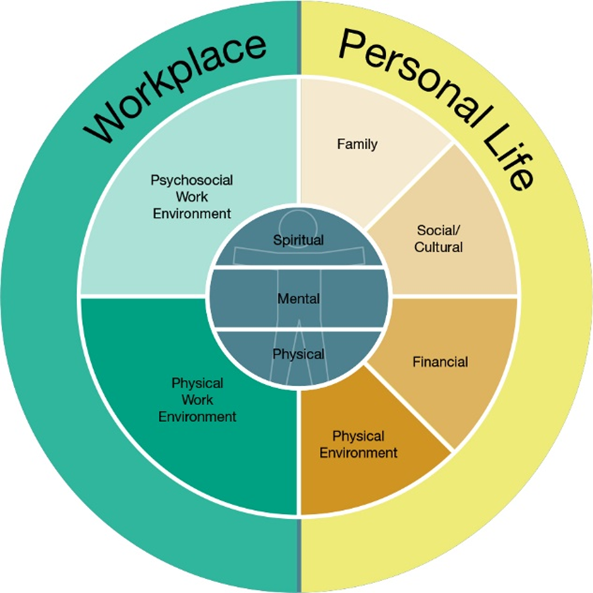
To foster a positive workplace environment, the Faculty takes a three-step approach:
- Defining Workplace Environment:
The workplace environment refers to both the physical setting and overall atmosphere in which faculty members and support staff operate. It is perceived as either emotionally supportive or unsupportive. By clearly understanding this concept, the Faculty is better equipped to create an environment that promotes productive and effective work. - Understanding Its Importance:
The Faculty acknowledges that a positive work environment contributes to staff well-being. When the environment is welcoming and comfortable, personnel are more likely to enjoy coming to work, feel at ease in the office, and willingly devote time to their tasks. - Creating a Positive Environment:
The Faculty is committed to establishing a positive workplace, with specific strategies and initiatives outlined in the table below.
The Creations of a Positive Workplace Environment
| Aspect | Description |
| Atmospheric Environment | |
| Good work organization | – The Faculty appears as an organization with a clear strategy, where members know their roles and responsibilities, enabling them to contribute to faculty achievement. |
| Healthy leadership | – The Faculty exercises healthy leadership as it is essential to creating a climate of trust in which the members feel that their needs are accounted for and the Faculty is their ally. |
| High level of team cohesion | – The Faculty encourages interactions between members to foster positive emotional bonding, making them feel that working together is a pleasant experience. |
| Psychological security | – The Faculty makes it significant to prevent psychological risks, including anxiety, stress, and burnout syndrome. With this prevention, the members are likely to consider the workplace a friendly place rather than a threat to their well-being. |
| Flexibility | – The Faculty promotes flexibility for its members not to be confined to a physical office space, but is adaptable to remote work settings. |
| Relationship to the University Culture | – The Faculty encourages the relationship with the University, but still keeps its unique characteristics. |
| Physical Environment | |
| Physical atmosphere | – The Faculty ensures that physical factors, including light, temperature, decoration, noise, office layout, ergonomic quality of tables and chairs, and the size of the office, contribute to working well. These factors affect the emotions experienced by the members. |
| Physical security | – The Faculty makes the members confident that the office environment does not put their physical vulnerability at risk. This aspect is the University’s responsibility to have CCTV cameras installed inside the building and security guards on duty 24/7. |
| IT technology | – Although this aspect is the University’s responsibility, the Faculty ensures that all members can access the Internet and all technology provided to help them achieve their work goals. |
The Faculty developed a questionnaire to assess faculty members’ perceptions of both the physical and non-physical aspects of the workplace environment. Additionally, the “Happy Workplace Index” is used as a supplementary measure, which currently indicates a high level of overall happiness in the workplace (4.42)
หลักฐาน
| รหัสหลักฐาน | ชื่อหลักฐาน(พร้อมแนบลิ้งค์) |
| 5.1.2 (1) -1 | รูปห้องทำงานของอาจารย์ |
| 5.1.2 (1) -2 | รูปกล้องวงจรปิด |
| 5.1.2 (1) -3 | รูปอาจารยในคณะถ่ายรูปรวมกัน |
| 5.1.2 (1) -4 | ผลการประเมินดัชนีความสุขของบุคลากร (Happy Workplace Index) |
| 5.1.2 (1) -5 | ประเมินความพึงพอใจ/ไม่พึงพอใจ และความผูกพันที่มีต่อการทำงานของบุคลากร : ส่วนที่ 4 ความพึงพอใจต่อการทำงาน (ด้านสภาพแวดล้อมการทำงานและสิ่งอำนวยความสะดวก) |

Workforce compensation and benefits are jointly managed by the University and the Faculty, with each providing different types of support. These various forms of compensation and benefits are illustrated in the diagram below.
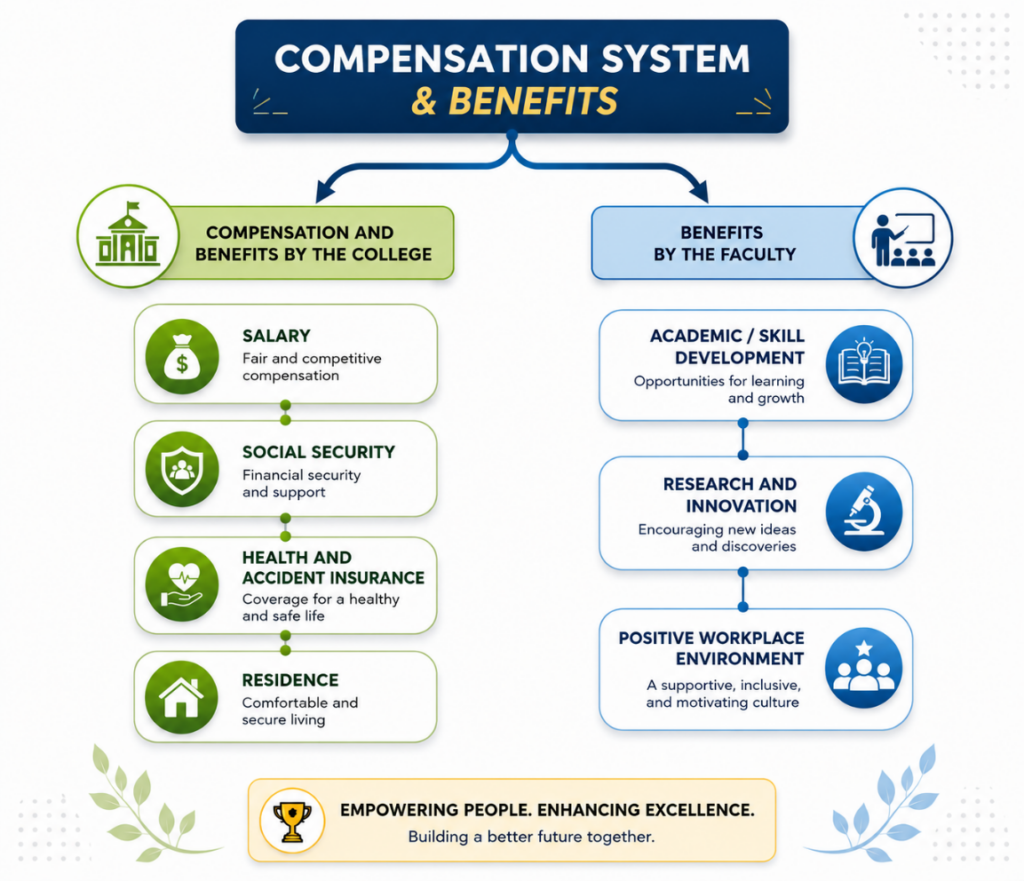
As illustrated above, workforce compensation and benefits are split into two primary categories: direct (monetary rewards) and indirect (non-monetary benefits with financial value).
1. University-Provided Compensation and Benefits
The University directly manages and distributes both direct and indirect compensation to all faculty members and support staff.
- Performance Evaluations: At the end of each fiscal year, the Dean evaluates the performance of faculty and staff, submitting the results to the University’s Administrative Office to inform performance-based salary adjustments.
- Leadership Oversight: The Administrative Office directly evaluates the Dean’s performance.
2. Faculty-Provided Benefits for Professional Growth
Collaborating with various committees, the Dean actively supports individual and professional development through four key initiatives:
- Academic Development: Faculty members are encouraged to attend external seminars and training sessions. Additionally, the Faculty hosts internal workshops to improve teaching quality, focusing on skills like academic article writing and effective test item design.
- Research Support: Research initiatives are sustained through the Research Fund Project and the Publication Fund Project. The Faculty also provides structured guidelines to help educators apply for academic titles.
- Teaching and Project Tools: Faculty members can request the specific tools and equipment necessary to successfully execute their teaching and project-related duties.
- Support Staff Development: The Faculty Secretary is encouraged to attend internal and external training programs to sharpen her administrative skills, and she receives compensation for any work performed outside of regular hours.
The Bottom Line: Providing fair, meaningful compensation and robust development benefits is essential for driving motivation, elevating performance, and fostering deep institutional loyalty. Ultimately, these initiatives reduce turnover and cultivate a long-term commitment to both the Faculty and the University.
หลักฐาน
| รหัสหลักฐาน | ชื่อหลักฐาน(พร้อมแนบลิ้งค์) |
| 5.1.2 (2) -1 | โครงการพัฒนาศักยภาพทางการสอนของอาจารย์ |
| 5.1.2 (2) -2 | สรุปชั่วโมงโมงอบรมของอาจารย์และเลขา |
| 5.1.2 (2) -3 | เกณฑ์การขอตำแหน่งทางวิชาการ |
Self-Assessment 5.1
| เกณฑ์คุณภาพ | ประเมินตนเอง | คะแนน |
| 1. ขีดความสามารถและอัตรากำลังบุคลากร | ||
| (1) ความจำเป็นด้านขีดความสามารถและอัตรากำลัง (2) บุคลากรใหม่ (1 คะแนน) | / | 1 |
| (3) การจัดการการเปลี่ยนแปลงด้านบุคลากร (1 คะแนน) | / | 1 |
| (4) การทำงานให้บรรลุผล (1 คะแนน) | / | 1 |
| 2. บรรยากาศการทำงานของบุคลากร | ||
| (1) สภาวะแวดล้อมของการทำงาน (1 คะแนน) | / | 1 |
| (2) นโยบาย และสิทธิประโยชน์สำหรับบุคลากร (1 คะแนน) | / | 1 |
| รวมผลการประเมินตนเอง Criteria 5.1 | 5 | |