Criterion 7 – Facilities and Infrastructure
Criterion
Requirements
Quality level assessment
Result
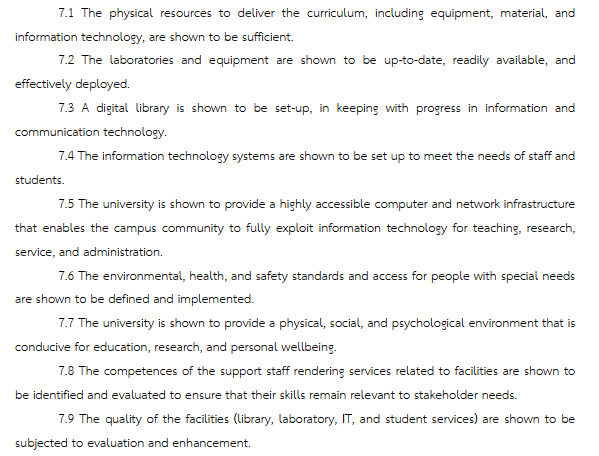
7.1 The physical resources to deliver the curriculum, including equipment, material, and information technology, are shown to be sufficient.
Operational Result
Operational Result
The Bachelor of Accountancy (B.Acc.) program at TRSU ensures that its physical resources—including classrooms, laboratories, information technology, and learning spaces—are adequate, accessible, and fully equipped to support high-quality teaching and learning. These facilities are regularly assessed and maintained to ensure alignment with academic requirements and advancements in the accounting field.
1. Classrooms and Instructional Spaces:
All classrooms allocated for the B.Acc. program are equipped to create a conducive learning environment for theoretical and applied instruction. Features include:
- Ergonomically designed seating arrangements
- Multimedia-enabled teaching tools such as projectors, audio-visual systems, and smart screens
- Whiteboards and traditional flipcharts for instructor use
- Air-conditioned environments to maintain comfort for students and faculty
- Adequate lighting and acoustics to ensure clear communication and visibility
These facilities support lecture-based learning, case study discussions, and collaborative group work essential to accounting education.
2. Computer Laboratories:
Recognizing the practical nature of accounting education, TRSU provides dedicated computer laboratories equipped with:
- Up-to-date hardware to support high-performance software usage
- Licensed accounting and business software such as QuickBooks, Tally, Microsoft Excel (advanced functions), and SPSS
- Internet access and networked systems for data research and online assessments
- Timetabled sessions for skill-based training and seminar classes
- Access control system to ensure resource availability under academic supervision
Students are encouraged to use these facilities for practice, projects, and financial simulations, reinforcing real-world application of theoretical knowledge.
3. Library and Learning Resources:
TRSU maintains a comprehensive library facility that serves as a central academic resource for students in the B.Acc. program. Key features include:
- A wide collection of accounting textbooks, reference materials, research journals, and electronic databases
- Access to national and international accounting standards, case studies, and financial reports
- Study zones, reading corners, and quiet individual spaces
- Group study rooms designed to promote peer learning, discussion, and research collaboration
- Digital library access for remote learning and research flexibility
Library services are supported by trained librarians who assist students with literature searches, citation tools, and research navigation.
4. IT Infrastructure:
The institution supports academic activities through robust Information and Communication Technology (ICT)infrastructure:
- Campus-wide Wi-Fi access
- Online learning portals (e-Learning, MIS)
- E-registration, e-testing, and academic performance tracking tools
- IT support services to assist both students and faculty in resolving tech-related issues
These systems collectively ensure that physical and digital resources are seamlessly integrated into curriculum delivery and academic operations.
Evidence
| ID_Evidence | Name_Evidence |
| 7.1.1 | University Classrooms and Facilities |
| 7.1.2 | Computer Room |
| 7.1.3 | Library |
7.2 The laboratories and equipment are shown to be up-to-date, readily available, and effectively deployed.
Operational Result
To support the practical and technology-integrated components of the Bachelor of Accountancy program, TRSU ensures that its laboratories and related equipment are modern, accessible, and effectively deployed to meet academic and industry standards.
Modern and Well-Equipped Laboratories:
The Information Technology Department has established a state-of-the-art computer laboratory located in the main academic building. This laboratory is purpose-built to support the specific software and digital tools used in accounting education, including:
- Licensed accounting software (e.g., QuickBooks, Tally)
- Spreadsheet and data analysis tools (e.g., Microsoft Excel, SPSS)
- Financial modeling applications
- Secure internet access for cloud-based systems and research
The lab infrastructure is regularly updated with current-generation hardware and licensed software to ensure compatibility with evolving industry practices and curricular requirements.
Accessibility and Readiness:
The computer lab is readily accessible to students and faculty for scheduled classes, workshops, and independent practice. A system for booking and access control ensures:
- Prioritized use for academic purposes
- Equitable access among student groups
- Supervised usage during seminar and practice sessions
The lab is also used for hands-on training, skill-building sessions, and project-based learning—especially for courses involving computerized accounting, financial reporting, and business analytics.
Technical Support and Integration with Teaching:
A dedicated team of IT and technical support staff ensures:
- Daily maintenance and troubleshooting of lab equipment
- Real-time support during teaching sessions
- Upgrades of hardware/software as per academic calendar cycles
These services ensure seamless integration of digital tools in the teaching-learning process across classrooms and labs.
Support for Learning Management and Online Systems:
The computer lab also serves as a backbone for supporting the Learning Management System (LMS), which includes e-learning platforms, online assessments, and student academic tracking through the Management Information System (MIS). The availability of ICT infrastructure ensures that digital components of teaching are well-supported both in class and during offsite or blended learning sessions.
Evidence
| ID_Evidence | Name_Evidence |
| 7.2.1 | Sports and Fitness Facilities |
| 7.2.2 | Library Conference Room |
| 7.2.3 | Classroom Facilities |
| 7.2.4 | Student Development Plan |
7.3 A digital library is shown to be set-up, in keeping with progress in information and communication technology.
Operational Result
The TRSU Library has successfully integrated a digital library system to support modern academic research, self-directed learning, and efficient access to learning materials. The digital transformation of the library is in line with advancements in Information and Communication Technology (ICT) and aims to enhance the accessibility and functionality of academic resources for students and faculty members alike.
Digital Library Access and Search Functionality:
To promote ease of access, the library has implemented a user-friendly digital search interface that enables students, lecturers, and researchers to:
- Search learning materials using book titles, author names, or reference numbers
- Access bibliographic information and availability status in real-time
- Reserve books or materials in advance via the online catalog
The system significantly reduces search time and supports effective planning for coursework, research, and project preparation.
Electronic Resources and Learning Tools:
The library’s digital infrastructure includes:
- e-Journals and e-Books in accounting, business, economics, and management
- Multimedia publications for interactive learning
- Access to online research databases and open educational resources (OERs)
- A self-learning center equipped with internet-enabled computers and digital study aids
These resources are continuously updated to reflect current trends and support the evolving curriculum.
Library Usage and ICT Integration:
To track usage and enhance security, all users are required to sign in and out using their unique ID numbers at the digital entry terminal. This system allows:
- Accurate monitoring of library attendance
- Digital tracking of user history and borrowing patterns
- Improved management of library operations by the librarians
The library is fully equipped with continuous Wi-Fi service and internet access points to support digital resource usage within its premises.
Operating Hours:
The TRSU Library remains open and accessible for extended academic support:
- Monday to Friday: 8:00 a.m. – 5:00 p.m.
- Saturday: 8:00 a.m. – 12:00 p.m.
This schedule ensures that both weekday and weekend learners have sufficient time to utilize library services.
Evidence
| ID_Evidence | Name_Evidence |
| 7.3.1 | Online Library System |
| 7.3.2 | Printing and Photocopying Services |
| 7.3.3 | Research Database |
7.4 The information technology systems are shown to be set up to meet the needs of staff and students.
Operational Result
The Bachelor of Accountancy program, in collaboration with the College’s Information Technology Office, has established a comprehensive IT infrastructure to support the academic delivery, student learning experience, and administrative operations for both students and staff.
Campus-Wide Network Connectivity:
The College has implemented a high-speed internet network covering more than 90% of the campus, including:
- All academic buildings and classrooms
- Student dormitories
- Cafeterias and common areas
This campus-wide connectivity ensures that students and faculty can reliably access digital platforms, learning resources, and communication tools from almost any location within the institution.
Academic Technology Platforms:
To support teaching and learning, the following digital platforms are fully operational:
- LMS (Learning Management System): Used for distributing learning materials, assessments, and academic announcements.
- Google Classroom: An alternative distance learning tool widely adopted for assignments, real-time discussions, and content sharing.
- E-testing and e-assessment systems: Support for quizzes, midterms, and online exams to ensure flexible evaluation.
These tools are designed to ensure seamless academic engagement, especially for blended or remote learning modes.
Administrative Digital Services:
The College also provides centralized digital services that streamline administrative tasks and enhance communication:
- E-registration and E-enrollment Systems: Enable students to register for courses, view timetables, and track academic status online.
- STIC Official Email Accounts: All faculty members and students are provided with institutional email addresses to facilitate formal communication and secure access to academic resources.
- MIS (Management Information System): Allows tracking of academic performance, course history, and feedback exchange between students and faculty.
Support for Staff and Faculty:
Faculty and administrative personnel benefit from:
- Access to online course management tools and grading portals
- IT support for classroom equipment and office systems
- Cloud-based file sharing and collaboration systems for interdepartmental communication
Regular training workshops and IT support sessions are conducted to ensure faculty and staff can effectively use digital tools in their teaching and administrative roles.
Conclusion:
The College’s integrated IT ecosystem is strategically designed to meet the academic, communication, and administrative needs of both students and staff. It is continuously updated and monitored to ensure reliability, security, and efficiency in alignment with educational and operational goals.
Evidence
| ID_Evidence | Name_Evidence |
| 7.4.1 | LINE Group for Announcement |
| 7.4.2 | Institutional Email |
| 7.4.3 | Google Classroom |
| 7.4.4 | Institutional Website |
| 7.4.5 | Library System |
| 7.4.6 | Exam Schedule – Online Announcement |
| 7.4.7 | Library |
| 7.4.8 | Management Information System |
| 7.4.9 | IT Training and Program |
| 7.4.10 | MIS Training |
7.5 The university is shown to provide a highly accessible computer and network infrastructure that enables the campus community to fully exploit information technology for teaching, research, service, and administration.
Operational Result
TRSU provides a comprehensive and highly accessible computer and network infrastructure that empowers the campus community—including students, faculty, and staff—to fully leverage information technology in support of teaching, research, community service, and administrative efficiency.
Campus-Wide Network Access:
The College has established a robust campus-wide Wi-Fi network, offering reliable internet connectivity across:
- All teaching and learning spaces
- Computer laboratories
- Faculty offices
- Student dormitories
- Public spaces such as libraries, cafeterias, and common halls
Students and faculty members have individual login credentials to access the internet securely, facilitating seamless use of online academic platforms, digital learning materials, and cloud-based services.
Computer Infrastructure and Lab Facilities:
To ensure that the curriculum is delivered with a strong technological foundation, the College has developed fully equipped computer laboratories, available for:
- Classroom instruction involving accounting software and business simulation tools
- Skill enhancement sessions such as Microsoft Excel, SPSS, QuickBooks, and other financial tools
- TOEIC Preparation and Testing, enabling students to meet the graduation requirement for English language proficiency
These labs are maintained with up-to-date hardware and licensed software, and are supervised by IT staff to support smooth operation and troubleshooting during academic sessions.
Support for Teaching and Research:
The IT infrastructure supports diverse teaching methods, including:
- Blended learning and flipped classrooms
- Digital assessments and e-learning platforms
- Access to online academic journals, databases, and digital libraries for faculty-led and student research
- Classroom multimedia integration (smart projectors, digital whiteboards)
Faculty members benefit from secure institutional email accounts, cloud storage, and a centralized Learning Management System (LMS) to upload course materials, monitor student progress, and engage learners online.
Support for Administrative Functions and Services:
In addition to academic support, the computer and network infrastructure is integrated with administrative systems such as:
- Management Information System (MIS) for academic records, student performance tracking, and advisor-advisee communication
- E-registration and e-enrollment platforms for course selection, scheduling, and academic notifications
- Online portals for finance, human resources, student services, and facility reservations
Conclusion:
The university’s investment in a highly accessible IT and network infrastructure demonstrates a strong commitment to academic excellence, research productivity, institutional efficiency, and service delivery. The seamless integration of technology across all domains ensures that the campus community can fully exploit digital resources in pursuit of educational and professional goals.
Evidence
| ID_Evidence | Name_Evidence |
| 7.5.1 | Computer Laboratory |
| 7.5.2 | Library conference room |
| 7.5.3 | SPSS Program |
| 7.5.4 | Training from the IT Department |
| 7.5.5 | Moodle Login |
| 7.5.6 | Survey Satisfaction |
| 7.5.7 | MIS System Integration |
7.6 The environmental, health, and safety standards and access for people with special needs are shown to be defined and implemented.
Operational Result
TRSU has implemented clearly defined and comprehensive environmental, health, and safety (EHS) standards, along with infrastructure and policies that ensure accessibility for individuals with special needs, in accordance with national regulations and institutional quality assurance guidelines.
Compliance with Building and Safety Regulations:
All college facilities have been designed and constructed in compliance with relevant building control and fire protection laws, including:
- Clearly marked fire exits and fire escape stairways
- Strategically located chemical fire extinguishers and fire safety equipment throughout the premises
- Emergency lighting and ventilation systems in all classrooms and corridors
- CCTV surveillance and emergency alarms installed at key access points to ensure campus security and rapid response capabilities
Inclusive Infrastructure and Accessibility:
To promote an inclusive campus environment, TRSU has provided infrastructure to support individuals with special needs, including:
- Reserved parking spaces for persons with disabilities and pregnant individuals near building entrances
- Ramps and handrails at building entry points and key access areas
- Wide corridors and stairways to allow safe navigation for wheelchairs
- Clearly labeled and easily accessible restrooms for persons with disabilities
These measures support equal access to education and services for all members of the campus community.
Environmental Management Measures:
The College actively promotes environmental responsibility through:
- Waste segregation systems, with labeled bins for recyclable and non-recyclable materials
- Landscaping and maintenance of green spaces, including tree planting and plant care activities by students and staff
- Designated dining zones to prevent food littering in academic areas
- Regular campaigns on sustainability awareness and environmental hygiene
These practices reflect the institution’s commitment to ecological stewardship and cleanliness on campus.
Public Health and Hygiene Initiatives:
To protect student and staff health, the College ensures:
- Availability of clean drinking water stations in academic buildings and cafeterias
- Regular sanitation and cleaning schedules for all public spaces, classrooms, and restrooms
- Designated eating areas to maintain hygiene and food safety
During the COVID-19 pandemic, the University implemented strict additional health protocols:
- Temperature checks at entrances
- Placement of alcohol-based hand sanitizers at all service points
- Social distancing policies and rotation-based classroom cleaning
- Awareness posters and guidelines displayed across campus
These proactive measures ensured the well-being of all stakeholders during and beyond the public health crisis.
Conclusion:
TRSU’s ongoing implementation of environmental, health, and safety standards, along with its inclusive infrastructure for people with special needs, reflects a strong institutional commitment to safety, accessibility, and sustainable development. These standards are periodically reviewed and updated to remain aligned with best practices and regulatory requirements.
Evidence
| ID_Evidence | Name_Evidence |
| 7.6.1 | Security System |
| 7.6.2 | Health and Safety Programs |
| 7.6.3 | Health Guidelines |
| 7.6.4 | Parking Space and Meeting Point |
| 7.6.5 | Fire Exit and Fire Extinguisher |
| 7.6.6 | Safety Precautions |
| 7.6.7 | World No Tobacco Day |
| 7.6.8 | No Food Allowed Reminder / Announcement |
7.7 The university is shown to provide a physical, social, and psychological environment that is conducive for education, research, and personal wellbeing.
Operational Result
TRSU is committed to fostering a holistic educational environment that not only promotes academic success and research excellence but also supports the physical, social, and psychological wellbeing of its students, faculty, and staff. This integrated approach contributes to a positive campus culture, personal development, and academic engagement.
1. Physical Environment:
The college campus is designed to be green, safe, and accessible, creating a welcoming and inclusive atmosphere. Key features include:
- Shaded walkways, landscaped gardens, and open green spaces that promote relaxation and mental well-being
- Recreational areas such as a man-made lake, mini-golf course, and scenic sitting areas
- Well-lit and secure pathways, emergency exits, and CCTV-monitored zones to ensure personal safety
- Accessible infrastructure such as ramps, elevators, and wide corridors to accommodate individuals with special needs
These facilities contribute to a learning-friendly and stress-reducing physical environment.
2. Social and Recreational Facilities:
The University actively encourages a balanced student life by providing opportunities for social engagement, physical activity, and cultural participation:
- Dormitory-based sports facilities, including football fields, volleyball courts, and fitness rooms
- Campus events, student-led clubs, and leadership programs that promote peer interaction and social cohesion
- Common areas and student lounges where students can gather, collaborate, and relax
These spaces and activities play a critical role in building a vibrant campus life and promoting interpersonal development.
3. Academic and Research Support Spaces:
To support independent and collaborative scholarship, the library offers:
- Private research zones and carrels for focused academic work
- Group study rooms and seminar spaces to encourage team-based learning and idea exchange
- Access to both digital and physical learning resources to support coursework and research projects
The layout and availability of these resources foster an academic environment conducive to inquiry, discovery, and innovation.
4. Psychological Support and Wellbeing Initiatives:
Recognizing the importance of mental health and emotional wellbeing, the University provides:
- Counseling services through trained personnel to assist students facing academic, emotional, or personal challenges
- Workshops and awareness campaigns focused on stress management, mindfulness, and mental wellness
- A supportive advisor–advisee system that ensures ongoing personal guidance and mentoring
- Accessible referral systems for students needing external mental health resources
These measures aim to ensure that all members of the campus community feel supported and empowered throughout their academic journey.
Conclusion:
TRSU has created an educational ecosystem that supports not just learning and research, but also the personal growth, psychological safety, and social development of its community. By integrating well-maintained physical infrastructure with emotional support services and inclusive recreational opportunities, the university sustains a campus environment that is healthy, engaging, and conducive to lifelong learning.
Evidence
| ID_Evidence | Name_Evidence |
| 7.7.1 | Dorm Night |
| 7.7.2 | Freshmen Night |
| 7.7.3 | General Orientation |
| 7.7.4 | Advisory – Academic Advising and Support Services |
| 7.7.5 | Team Building |
| 7.7.6 | International Day |
| 7.7.7 | Sports Day |
| 7.7.8 | Campus Safety Measure |
7.8 The competences of the support staff rendering services related to facilities are shown to be identified and evaluated to ensure that their skills remain relevant to stakeholder needs.
Operational Result
To ensure the delivery of high-quality services related to campus facilities, TRSU has established a systematic process for identifying, recruiting, evaluating, and developing the competencies of support staff responsible for facilities management. This approach ensures that staff capabilities remain relevant to the evolving needs of students, faculty, and institutional stakeholders.
Competency-Based Recruitment and Role Clarity:
The Faculty of Business Administration adheres to a structured personnel management system that includes:
- Clearly defined job descriptions and qualifications for each facility-related support position
- A recruitment process based on core competencies, including technical knowledge, problem-solving skills, communication abilities, and work ethics
- Role-specific orientation and task guidelines provided upon hiring to ensure clarity of responsibilities and expected outcomes
Facility support roles require practical and responsive skills to manage infrastructure, address safety concerns, and maintain campus functionality.
Key Competencies of Facility Support Staff:
TRSU facility support personnel are selected and trained based on the following critical competencies:
- Technical and problem-solving skills to effectively manage maintenance issues, conduct timely repairs, and ensure safe operation of physical resources
- Effective communication to interact with students, faculty, administrative departments, and external contractors, ensuring clear coordination and service delivery
- Organizational and time management skills to prioritize maintenance requests, adhere to service schedules, document work orders, manage inventory, and ensure minimal disruption to campus operations
- Responsiveness and customer service orientation to promptly address stakeholder needs and uphold service quality
Evaluation and Professional Development:
To maintain service excellence, facility-related support staff undergo regular performance evaluation, which includes:
- Annual performance reviews by supervisors based on service quality, responsiveness, and adherence to safety and maintenance protocols
- Feedback from stakeholders, including faculty, students, and department heads, to identify areas for improvement
- Ongoing training and upskilling programs conducted by the Human Resources Department to ensure staff stay current with safety standards, equipment handling procedures, and environmental management practices
Staff are encouraged to participate in refresher workshops and certification programs to enhance both technical and interpersonal capabilities.
Alignment with Stakeholder Needs:
The performance and development of facility support staff are continuously aligned with stakeholder expectations through:
- Routine service quality assessments
- Issue tracking logs to analyze recurring concerns and ensure preventive action
- Cross-departmental meetings for coordination and stakeholder feedback collection
These mechanisms ensure that facility services are not only efficient and reliable but also responsive to the dynamic needs of the campus community.
Evidence
| ID_Evidence | Name_Evidence |
| 7.8.1 | Staff Contract |
| 7.8.2 | Evaluation from student services |
| 7.8.3 | Job Description |
| 7.8.4 | Support Staff Competency Evaluation |
7.9 The quality of the facilities (library, laboratory, IT, and student services) are shown to be subjected to evaluation and enhancement.
Operational Result
TRSU is committed to ensuring that all campus facilities—including the library, laboratories, information technology infrastructure, and student services—meet high quality standards and continue to evolve in response to user needs. A structured system of evaluation, feedback collection, and continuous enhancement is in place to maintain and improve the quality of these facilities.
Annual Facility Evaluation Process:
The University conducts annual satisfaction surveys and performance assessments targeting both students and faculty to evaluate the functionality, accessibility, and adequacy of core facilities. These surveys are designed to:
- Measure the level of user satisfaction
- Identify service gaps or outdated infrastructure
- Collect suggestions for improvement and modernization
The feedback mechanisms include both quantitative ratings and qualitative inputs from open-ended responses.
Action-Based Enhancements:
Following the evaluation results, the college has taken several steps to improve the quality of its facilities:
- Library: Expansion of digital collections, extended hours, and more private research spaces
- Laboratories: Upgrade of computer hardware and installation of additional accounting software tools
- IT Infrastructure: Ongoing Wi-Fi signal improvement project to extend coverage and increase bandwidth in all academic zones and dormitories
- Student Services: Increased support staff presence and training, with better signage, queue systems, and digitized service forms
These improvements are based directly on user feedback and demonstrate a data-driven approach to facility enhancement.
Continuous Quality Assurance:
The institution uses these evaluations as part of its internal quality assurance system. Results are:
- Reviewed by the academic committee and administration
- Used to inform budgeting and procurement decisions
- Incorporated into strategic facility improvement plans
This ensures that facility development remains aligned with academic goals, stakeholder expectations, and technological advancements.
Evidence
| ID_Evidence | Name_Evidence |
| 7.9.1 | Student Services Survey |
| 7.9.2 | Benchmarking and Continuous Improvement Plan on Support Services |
| 7.9.3 | Teachers’ Satisfaction Survey |
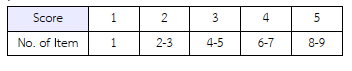
Self-Assessment
| Requirements | Result | Score |
| 7.1 The physical resources to deliver the curriculum, including equipment, material, and information technology, are shown to be sufficient. | / | 1 |
| 7.9 The quality of the facilities are shown to be subjected to evaluation and enhancement. | / | |
| 7.2 The laboratories and equipment are shown to be up-to-date, readily available, and effectively deployed. | / | 1 |
| 7.3 A digital library is shown to be set-up, in keeping with progress in information and communication technology. | / | |
| 7.4 The information technology systems are shown to be set up to meet the needs of staff and students. | / | 1 |
| 7.5 The university is shown to provide a highly accessible computer and network infrastructure that enables the campus community to fully exploit information technology for teaching, research, service, and administration. | / | |
| 7.6 The environmental, health, and safety standards and access for people with special needs are shown to be defined and implemented. | / | 1 |
| 7.7 The university is shown to provide a physical, social, and psychological environment that is conducive for education, research, and personal wellbeing. | / | |
| 7.8 The competences of the support staff rendering services related to facilities are shown to be identified and evaluated to ensure that their skills remain relevant to stakeholder needs. | / | 1 |
| Overall | 5 | |