Criterion 7 – Facilities and Infrastructure
Criterion
Requirements
Quality level assessment
Result
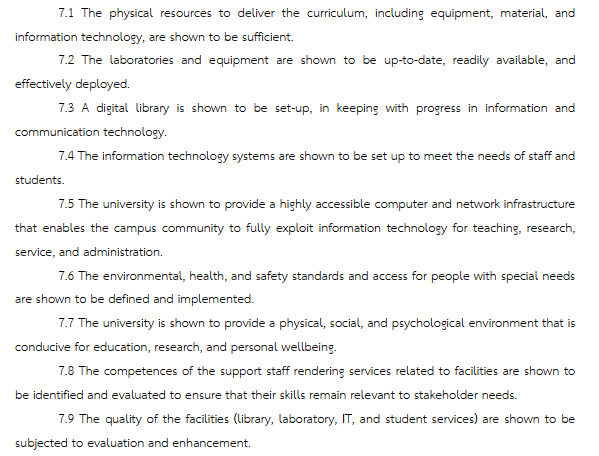
7.1 The physical resources to deliver the curriculum, including equipment, material, and information technology, are shown to be sufficient.
Operational Result
Performance
The physical resources necessary for delivering the curriculum, including equipment, instructional materials, and information technology, were demonstrated to be sufficient and effective in supporting the Bachelor of Business Administration (BBA) program.
| Resource / Improvement | Actual Use | Operational Result |
| Classrooms and learning spaces | Used for lectures, discussions, presentations, and student engagement activities | Supported the regular and effective delivery of courses under the BBA curriculum |
| Projectors, TV monitors, and speakers | Used for multimedia presentations, interactive lectures, and classroom discussions | Improved instructional delivery and enhanced student participation in learning activities |
| Upgraded Wi-Fi connectivity | Used for online learning activities, research-based assignments, and access to digital resources | Improved access to online academic materials and supported technology-enabled learning |
| Computer room | Used for academic research, digital learning, completion of course requirements, and technology-related tasks | Strengthened students’ research skills, digital literacy, and academic productivity |
| Mock-up room for International Business and Logistics Management | Used for simulations, applied activities, and experiential learning | Provided students with practical learning opportunities aligned with the curriculum |
| Instructional materials and IT resources | Used to support teaching, learning, research, and student support services | Ensured that faculty and students had the necessary resources for curriculum delivery |
Overall Result:
The physical and technological resources of the Bachelor of Business Administration program were sufficient, accessible, and functional. These resources supported effective curriculum delivery, improved classroom instruction, enhanced student learning experiences, and contributed to achieving student learning outcomes.
Evidence
| ID_Evidence | Name_Evidence |
| 7.1.1 | University Classrooms and Facilities |
| 7.1.2 | Computer Room |
| 7.1.3 | LG/IB Mock Room |
| 7.1.4 | LCD |
| 7.1.5 | Speakers |
| 7.1.6 | Library |
7.2 The laboratories and equipment are shown to be up-to-date, readily available, and effectively deployed.
Operational Result
The Bachelor of Business Administration program, covering International Business, Logistics Management, Tourism, and Hotel Management, has up-to-date, readily available, and effectively deployed laboratories, facilities, and equipment that support teaching, learning, research, practical training, and student development. These resources align with the curriculum requirements and are used to develop students’ academic, technical, professional, and practical competencies.
The program uses the following laboratories, facilities, and equipment:
| Laboratory / Equipment / Facility | Actual Use | Operational Result |
| Cafeteria for Food and Beverage Operations | Used for practical training in beverage preparation and service, including cocktails and mocktails | Supported the development of students’ practical skills and course competencies in Food and Beverage Operations |
| Computer Room | Used for research, data analysis, Zotero practice, digital learning activities, and TOEIC preparation | Strengthened students’ research skills, digital literacy, data handling, and academic preparation |
| Mock-up Room for International Business and Logistics Management | Used for simulations, demonstrations, applied activities, and practice-based learning | Provided students with experiential learning opportunities aligned with International Business and Logistics Management courses |
| Classroom Equipment | LCD projectors, speakers, boards, and other instructional tools used for lectures, presentations, and discussions | Enhanced teaching delivery, classroom interaction, and multimedia-supported instruction |
| Library Conference Room | Used for small-group discussions, collaborative learning, mentoring, and consultations | Supported student collaboration, academic consultation, and knowledge sharing |
| Project Rooms | Used by lecturers for mentoring students, organizing group activities, and conducting academic consultations | Improved faculty-student engagement and supported group-based learning activities |
| Fitness Center | Used for physical fitness, health, wellness, and student development activities | Supported students’ well-being and holistic development |
| Recreational Facilities | Used for leisure, relaxation, student interaction, and informal engagement | Contributed to student wellness, relaxation, and positive campus experience |
These laboratories, equipment, and facilities are maintained, accessible, and effectively deployed according to the needs of the curriculum. Their availability supports both academic and practical learning experiences and contributes to the continuous improvement of teaching, learning, research, student support, and student development.
Additionally, the program provides various project rooms where lecturers can convene, mentor students, or organize group activities.
Evidence
| ID_Evidence | Name_Evidence |
| 7.2.1 | Sports and Fitness Facilities |
| 7.2.2 | Library Conference Room |
| 7.2.3 | Classroom Facilities |
| 7.2.4 | LG/IB Mock Room |
| 7.2.5 | Food and Beverage Activity Area |
| 7.2.6 | Student Development Plan |
7.3 A digital library is shown to be set-up, in keeping with progress in information and communication technology.
Operational Result
The Business Administration Program uses the Online University Library System (ULib) as its digital library platform, providing students and faculty with access to relevant academic information and learning resources. The establishment of ULib demonstrates the program’s commitment to keeping pace with developments in information and communication technology and supporting technology-enabled learning, teaching, and research.
The ULib system links students to essential digital resources, including academic references, research materials, databases, journals, and publications relevant to the program. Its collection includes both English and Thai publications to address the diverse learning needs of students across the university’s degree programs. Through the system, students can access accurate, appropriate, and reliable information that supports independent learning, research writing, academic projects, and the production of original scholarly work.
To support the effective use of the digital library, the program provides the following resources and facilities:
| Resource / Facility | Purpose and Deployment |
| Online University Library System (ULib) | Provides digital access to academic references, journals, databases, research materials, and other learning resources. |
| ULib Computer Terminals | Equipped with necessary software and tools to support online academic research, study, and access to digital library resources. |
| Research Resources | Include databases, academic journals, and reference materials that support student research, coursework, and academic writing. |
| Conference Rooms | Support collaborative learning, group discussions, research consultations, and knowledge sharing among students and faculty. |
| Printing and Photocopying Services | Allow students to obtain physical copies of digital or printed materials when needed for academic purposes. |
Through these digital and physical support facilities, the program ensures that students have access to ICT-supported library services that enhance academic learning, research capability, and information literacy. The availability of ULib and related resources supports meaningful research engagement, promotes independent learning, and contributes to the academic development of students in the Business Administration Program.
Evidence
| ID_Evidence | Name_Evidence |
| 7.3.1 | Online Library System |
| 7.3.2 | Printing and Photocopying Services |
| 7.3.3 | Research Database |
7.4 The information technology systems are shown to be set up to meet the needs of staff and students.
Operational Result
The Bachelor of Business Administration program, with the support of St. Teresa International University, has established information technology systems that support the academic, research, communication, and administrative needs of both staff and students. These systems are used to enhance teaching and learning delivery, provide access to academic resources, support research activities, facilitate communication, and improve program operations. The effectiveness of these information technology systems is monitored through user feedback, service requests, system maintenance, usage observations, and coordination with the Information Technology Office to ensure that the systems remain functional, accessible, and responsive to the needs of students and staff.
| Information Technology System / Resource | Users Served | Purpose and Deployment | Evidence of Meeting Needs |
| Upgraded Wi-Fi Connectivity | Students and staff | Supports online learning, research, communication, access to digital resources, and classroom-based internet use | Enables students and lecturers to access online materials, conduct research, and participate in technology-supported learning activities |
| Computer Room | Students and staff | Used for academic research, data analysis, digital learning activities, Zotero practice, TOEIC preparation, and completion of course requirements | Supports students’ research skills, digital literacy, academic productivity, and language preparation |
| Online University Library System / ULib | Students and staff | Provides access to digital references, research materials, academic journals, databases, and other learning resources | Allows students and faculty to access reliable academic information for coursework, research, and teaching preparation |
| ULib Computer Terminals | Students and staff | Provide access points for online library services and academic research tools | Ensures that students and staff have available facilities to use the digital library and related academic resources |
| Classroom IT Equipment | Students and lecturers | Includes projectors, TV monitors, speakers, and related multimedia tools used for lectures, presentations, discussions, and interactive learning | Enhances teaching delivery, supports multimedia instruction, and improves classroom engagement |
| Online Communication Platforms | Students, lecturers, and administrative staff | Used for announcements, consultation, coordination, mentoring, academic reminders, and communication between students and staff | Improves timely communication, academic guidance, and coordination of program activities |
| Digital Learning Materials and Online Resources | Students and lecturers | Support online learning activities, research-based assignments, independent study, and preparation of instructional materials | Helps students complete academic requirements and enables lecturers to enrich teaching content |
| Administrative IT Support | Staff and program personnel | Supports academic documentation, student records, coordination, scheduling, communication, and program-related administrative tasks | Improves efficiency, accuracy, and accessibility of academic and administrative processes |
Overall Result:
The information technology systems of the Bachelor of Business Administration program are established, accessible, functional, and responsive to the needs of staff and students. These systems support effective teaching and learning, research engagement, academic communication, digital access, student support, and administrative efficiency. Their availability demonstrates the program’s commitment to providing technology-supported education and continuously improving the quality of academic services.
Evidence
| ID_Evidence | Name_Evidence |
| 7.4.1 | LINE Group for Announcement |
| 7.4.2 | Institutional Email |
| 7.4.3 | Google Classroom |
| 7.4.5 | Screenshot of Moodle (TOEIC Practices) |
| 7.4.6 | IT Facebook Account / Line / Email |
| 7.4.7 | Institutional Website |
| 7.4.8 | Library System |
| 7.4.9 | Exam Schedule – Online Announcement |
| 7.4.10 | Library |
| 7.5.11 | Management Information System |
| 7.5.12 | IT Training and Program |
| 7.5.14 | Internet Connection |
| 7.5.15 | MIS Training |
7.5 The university is shown to provide a highly accessible computer and network infrastructure that enables the campus community to fully exploit information technology for teaching, research, service, and administration.
Operational Result
The Bachelor of Business Administration program is supported by the university’s accessible computer and network infrastructure. Campus-wide Wi-Fi connectivity, computer laboratories, classroom technologies, online tools, study spaces, and IT Department support enable students, lecturers, and staff to maximize the use of information technology for teaching, research, service, and administration.
| Area | Available Infrastructure / Support | Result |
| Teaching | Campus-wide Wi-Fi, computer laboratories, LCD screens, speakers, classroom internet access, and digital learning materials | Improved delivery of lectures, multimedia presentations, interactive discussions, and online learning activities |
| Research | Computer laboratories, online references, Zotero, Grammarly, digital research tools, and internet access | Strengthened students’ and lecturers’ ability to conduct research, process data, manage citations, and improve academic writing |
| Service | Wi-Fi access, communication platforms, conference rooms, meeting rooms, and student support spaces | Enhanced student consultation, mentoring, academic support, group discussions, and communication with university offices |
| Administration | IT Department support, computer and network maintenance, digital communication tools, and documentation support | Improved coordination, academic documentation, scheduling, reporting, and overall program operations |
Evidence
| ID_Evidence | Name_Evidence |
| 7.5.1 | Computer Laboratory |
| 7.5.2 | Library conference room |
| 7.5.3 | Zotero Program |
| 7.5.4 | SPSS Program |
| 7.5.5 | List of Software Applications |
| 7.5.6 | Training from the IT Department |
| 7.5.7 | Moodle Login |
| 7.5.8 | Internet and Network Infrastructure |
| 7.5.9 | Survey Satisfaction |
| 7.5.10 | MIS System Integration |
7.6 The environmental, health, and safety standards and access for people with special needs are shown to be defined and implemented.
Operational Result
The Bachelor of Business Administration program, with the support of St. Teresa International University, ensures that environmental, health, and safety standards are defined and implemented to provide a safe, clean, inclusive, and supportive learning environment for students, lecturers, staff, and visitors. The university also provides facilities and support mechanisms that promote accessibility for people with special needs and encourage responsible campus behavior.
| Area | Defined Standards / Facilities / Practices | Implementation and Result |
| Environmental Standards | Recycling bins for paper, plastic, and other recyclable materials | Promotes waste segregation, environmental awareness, and responsible use of campus resources |
| Regular inspection and maintenance of air-conditioning systems | Helps maintain proper ventilation and acceptable indoor air quality in classrooms and offices | |
| Energy-efficient lighting | Supports energy conservation and promotes environmentally responsible campus operations | |
| Health Standards | Access to clean drinking water | Supports the health and well-being of students, lecturers, staff, and visitors |
| Regular cleaning of restrooms, classrooms, floors, and common areas | Maintains cleanliness, sanitation, and a healthy learning environment | |
| Liquid soap in washing areas | Encourages proper hygiene and handwashing practices | |
| Wellness programs and health-related reminders | Promotes health awareness, personal well-being, and preventive health practices | |
| Reminders on proper sanitation, mask-wearing when necessary, and physical distancing when applicable | Encourages responsible health behavior and supports the prevention of illness | |
| Safety Standards | Regular inspections and risk assessments | Helps identify and address possible hazards within the campus |
| Fire safety measures, including proper placement of fire extinguishers | Supports emergency preparedness and compliance with building safety requirements | |
| Safety measures related to work and learning hazards | Promotes safe practices in classrooms, offices, and other campus facilities | |
| Security gate schedule, with gates closed at 11:00 PM and opened at 5:00 AM | Strengthens campus security and controls access to the premises | |
| Security checking of cars and other modes of transportation | Enhances the safety and monitoring of campus entry and exit | |
| Speed limits for cars and motorcycles within the campus | Reduces the risk of vehicular accidents and promotes pedestrian safety | |
| Designated eating areas and reminders to keep classrooms and faculty rooms clean | Maintains cleanliness, orderliness, and a healthy academic environment | |
| Access for People with Special Needs | Designated parking spaces | Provides safer and more convenient access for persons with special needs |
| Accessible classrooms | Supports inclusive participation in academic activities | |
| Stair handrails | Improves mobility support and physical safety | |
| Speech recognition support, when needed | Assists individuals who may require technology-supported communication or accessibility tools | |
| Spiritual and Cultural Support | Chapel for Catholics and prayer room for Muslims | Supports inclusivity, respect for religious practices, and student well-being |
Evidence
| ID_Evidence | Name_Evidence |
| 7.6.1 | Security System |
| 7.6.2 | Health and Safety Programs |
| 7.6.3 | Health Guidelines |
| 7.6.4 | Recycle Management |
| 7.6.5 | Parking Space and Meeting Point |
| 7.6.6 | Fire Exit and Fire Extinguisher |
| 7.6.7 | Safety Precautions |
| 7.6.8 | Access for People with Special Needs |
| 7.6.9 | Chapel |
| 7.6.10 | World No Tobacco Day |
| 7.6.11 | Proper sanitary healthcare services |
| 7.6.12 | No Food Allowed Reminder / Announcement |
7.7 The university is shown to provide a physical, social, and psychological environment that is conducive for education, research, and personal wellbeing.
Operational Result
Performance
The Bachelor of Business Administration program, in cooperation with St Teresa International University, provides a physical, social, and psychological environment that supports education, research, personal development, and the overall well-being of students and academic staff. The university maintains facilities, activities, and support mechanisms that promote academic engagement, social interaction, emotional growth, and a positive campus experience.
| Area | Available Facilities / Activities / Support | Contribution to Education, Research, and Well-being |
| Physical Environment | Classrooms equipped with speakers, LCD projectors, Wi-Fi, and boards | Supports effective teaching, learning, presentations, discussions, and classroom engagement |
| Computer laboratories for data analysis, research activities, and referencing tools | Supports research work, academic writing, data processing, digital literacy, and completion of course requirements | |
| Food court, canteen, library, fitness area, and sports area | Provides safe and clean spaces for study, recreation, leisure, wellness, and student interaction | |
| Waste management systems | Maintains cleanliness, environmental responsibility, and a healthy campus environment | |
| Social Environment | Weekly Dorm Night, Sports Day, English Intensive Competition, Goodbye Senior, and Moral and Ethics Camp | Strengthens student engagement, teamwork, social interaction, leadership, discipline, and community involvement |
| Faculty meetings, advisory program, and lecturer-student consultation | Promotes communication, mentoring, academic guidance, and stronger relationships between lecturers and students | |
| International Day and cultural interaction activities | Encourages cultural awareness, inclusivity, respect for diversity, and international-mindedness | |
| Training activities for personal development | Develops students’ confidence, communication skills, leadership, professionalism, and interpersonal skills | |
| Psychological Environment | Test-taking and examination strategy activities | Helps students manage academic pressure and improve confidence in assessment situations |
| Resume writing and job interview preparation activities | Supports students’ career readiness, self-confidence, and transition to professional life | |
| Activities promoting self-esteem and self-awareness | Encourages emotional development, personal reflection, and positive self-concept | |
| Alcohol-free and smoke-free campaign during Sports Day | Promotes healthy lifestyle choices, responsible behavior, and a safe campus culture |
Overall Result:
The university provides a holistic and supportive environment that promotes academic learning, research engagement, social development, emotional well-being, and personal growth. Through appropriate facilities, student-centered activities, academic support, wellness initiatives, and inclusive campus programs, the Bachelor of Business Administration program fosters an environment conducive to education, research, and personal well-being for both students and academic staff.
Evidence
| ID_Evidence | Name_Evidence |
| 7.7.1 | Waste management system |
| 7.7.2 | Dorm Night |
| 7.7.3 | Freshmen Night |
| 7.7.4 | English Intensive |
| 7.7.5 | General Orientation |
| 7.7.6 | Advisory – Academic Advising and Support Services |
| 7.7.7 | Moral and Ethics |
| 7.7.8 | Team Building |
| 7.7.9 | International Day |
| 7.7.10 | Test Taking Activity |
| 7.7.11 | Resume Writing and Job Interview |
| 7.7.12 | Sports Day |
| 7.7.13 | Physical Infrastructure |
| 7.7.14 | Campus Safety Measure |
7.8 The competences of the support staff rendering services related to facilities are shown to be identified and evaluated to ensure that their skills remain relevant to stakeholder needs.
Operational Result
Performance
The Bachelor of Business Administration Program, in coordination with St. Teresa International University, ensures that the competencies and skills of support staff rendering services related to facilities and student support are identified, defined, evaluated, and developed in accordance with institutional policies and guidelines. Each support office or work unit has specific job descriptions, assigned responsibilities, and competency requirements that guide the delivery of services to students, lecturers, staff, and other stakeholders.
In response to the recommendation to establish criteria for evaluating the competencies of support staff and to promote their development based on the established criteria, the university evaluates support staff competencies using criteria such as knowledge of assigned duties, service quality, accuracy of work, responsiveness to stakeholder needs, communication skills, problem-solving ability, teamwork, compliance with institutional procedures, and ability to use relevant facilities, equipment, and information systems. These criteria help ensure that support staff can provide effective, efficient, and stakeholder-responsive services.
Support staff assigned to student services, library services, registration, information technology, academic support, and facility maintenance play an important role in maintaining a safe, functional, and conducive learning environment. Their competencies are monitored through supervision, performance evaluation, service feedback, task accomplishment, and compliance with institutional procedures. The results of evaluation and feedback are used to identify areas for improvement and to provide appropriate support, such as orientation, coaching, training, supervision, and skills development activities.
| Support Office / Unit | Identified Responsibilities and Competencies | Relevance to Stakeholder Needs | Evaluation and Development Mechanism |
| Student Affairs Office / Student Welfare Department | Organizes volunteer opportunities, student activities, school-related programs, and monitors the effectiveness and quality of student welfare activities. | Supports student engagement, personal development, community involvement, and overall student well-being. | Evaluated through activity reports, student feedback, supervision, and service quality monitoring; improvement actions may include coaching and training on student service delivery. |
| Student Loan Office | Assists students in loan applications, documentary requirements, and related financial assistance procedures. | Helps students access financial support and reduces barriers to continuing their education. | Evaluated through accuracy of documentation, responsiveness, student feedback, and compliance with financial assistance procedures. |
| Library / Academic Learning Support | Provides access to information resources, scholarly materials, learning references, digital information, and academic support services. | Supports teaching, learning, research, independent study, and access to reliable academic materials. | Evaluated through library usage records, satisfaction surveys, service feedback, and monitoring of resource accessibility. |
| School Librarian | Assists students and lecturers in locating learning materials, using library resources, and acquiring relevant academic references. | Strengthens students’ research skills, learning support, and use of academic resources. | Evaluated through service feedback, user assistance records, resource support effectiveness, and professional development participation. |
| Registration Office | Maintains confidentiality of student records, prepares examination-related matters, manages class schedules, and supports scholastic records and academic documentation. | Ensures accuracy, confidentiality, and efficiency in student records management and academic operations. | Evaluated through accuracy of records, timeliness of service, compliance with procedures, confidentiality practices, and feedback from students and faculty. |
| Information Technology Office | Manages, maintains, and supports technology services, computer systems, network infrastructure, and IT-related facilities. | Ensures that students, lecturers, and staff have access to functional technology systems for teaching, learning, research, communication, and administration. | Evaluated through system functionality, response time, service requests, user feedback, and maintenance reports; development may include training on new systems and digital tools. |
| Facility and Maintenance Support Staff | Supports cleanliness, repair, facility readiness, equipment maintenance, and safe use of campus facilities. | Maintains a safe, clean, functional, and conducive environment for academic and student activities. | Evaluated through facility inspection, maintenance reports, cleanliness standards, safety monitoring, and feedback from users; improvement actions include supervision, skills training, and corrective maintenance planning. |
The evaluation of support staff competencies is used not only to monitor performance but also to guide staff development. When gaps or areas for improvement are identified, the concerned office or supervisor provides appropriate guidance, coaching, training, or follow-up action. This process helps ensure that support staff continuously improve their competencies and remain responsive to the needs of students, lecturers, staff, and other stakeholders.
Overall Result
The university identifies, evaluates, and develops support staff competencies based on institutional job descriptions, assigned functions, established competency criteria, and stakeholder needs. Through supervision, performance monitoring, service feedback, task accomplishment, facility inspection, and follow-up improvement actions, the university ensures that support staff remain competent in delivering services related to student welfare, financial assistance, library and learning support, registration, information technology, and facilities. These practices help maintain effective academic operations, responsive student services, functional facilities, and a safe and supportive learning environment for the Bachelor of Business Administration Program.
Evidence
| ID_Evidence | Name_Evidence |
| 7.8.1 | Staff Contract |
| 7.8.2 | Evaluation from student services |
| 7.8.3 | Job Description |
| 7.8.4 | Support Staff Competency Evaluation |
7.9 The quality of the facilities (library, laboratory, IT, and student services) are shown to be subjected to evaluation and enhancement.
Operational Result
Performance
The Bachelor of Business Administration program, in coordination with St. Teresa International University, ensures that the quality of facilities and support services is regularly evaluated and enhanced to remain responsive to the needs of students, lecturers, staff, and other stakeholders. The library, laboratories, information technology systems, and student services are monitored through inspections, feedback, usage records, service reports, and institutional review processes. The results of these evaluations are used as a basis for improving facilities, updating resources, strengthening support services, and maintaining a conducive learning environment.
| Facility / Service Area | Evaluation Conducted | Enhancement Based on Evaluation |
| Library / Academic Learning Support | The quality of library services is evaluated through student and faculty feedback, library usage records, review of learning resources, ULib access monitoring, and assessment of librarian assistance. | Learning resources are updated, access to digital references is improved, and library support services are strengthened to support teaching, learning, and research. |
| Laboratories / Computer Room / Mock-up Room | Laboratories and equipment are evaluated through regular inspections, equipment functionality checks, lecturer and student feedback, facility usage logs, and laboratory readiness checklists. | Equipment is maintained, repaired, or improved; laboratory spaces are prepared for class use; and facilities are enhanced to support research, data analysis, simulations, and practical learning. |
| Information Technology Systems | IT systems are evaluated through Wi-Fi connectivity monitoring, computer functionality checks, classroom IT equipment inspection, IT service request logs, and user satisfaction feedback. | Wi-Fi connectivity is upgraded, computer systems are maintained, classroom IT equipment is repaired or improved, and technical support is provided to students, lecturers, and staff. |
| Classroom Facilities | Classrooms are evaluated through regular room inspections, checking of projectors, TV monitors, speakers, boards, chairs, lighting, ventilation, and feedback from lecturers and students. | Classroom facilities and equipment are maintained, repaired, or upgraded to support lectures, multimedia presentations, classroom discussions, and interactive learning. |
| Student Services | Student services are evaluated through student feedback, activity evaluation forms, service records, advising logs, consultation records, and monitoring of support offices such as Student Affairs, Student Loan Office, and Registration Office. | Student support services are improved through better coordination, stronger advising, enhanced student welfare activities, financial assistance support, and efficient academic documentation services. |
| Health, Safety, and Accessibility Facilities | Health, safety, and accessibility facilities are evaluated through safety inspections, fire equipment checks, cleanliness monitoring, security reports, accessibility checklists, and stakeholder feedback. | Cleanliness, security procedures, fire safety measures, accessibility support, and facility maintenance are enhanced to ensure a safe, healthy, inclusive, and supportive campus environment. |
| General Facilities and Maintenance | General facilities are evaluated through preventive maintenance schedules, repair logs, work order forms, facility inspection reports, and annual review of facility needs. | Repairs, replacements, maintenance activities, and facility improvements are implemented based on identified needs and stakeholder feedback. |
Overall Result:
The quality of university facilities and support services is evaluated through stakeholder feedback, satisfaction surveys, inspection reports, usage records, maintenance logs, service request reports, and facility reviews. The results of these evaluations serve as the basis for enhancement actions and are communicated to concerned offices and support personnel for appropriate follow-up. These mechanisms ensure that the library, laboratories, IT systems, classrooms, and student services remain functional, accessible, relevant, safe, and responsive to the needs of students, lecturers, staff, and other stakeholders.
Evidence
| ID_Evidence | Name_Evidence |
| 7.9.1 | Student Services Survey |
| 7.9.2 | Benchmarking and Continuous Improvement Plan on Support Services |
| 7.9.3 | Teachers’ Satisfaction Survey |
Self-Assessment
| Requirements | Result | Score |
| 7.1 The physical resources to deliver the curriculum, including equipment, material, and information technology, are shown to be sufficient. | / | 1 |
| 7.9 The quality of the facilities are shown to be subjected to evaluation and enhancement. | / | |
| 7.2 The laboratories and equipment are shown to be up-to-date, readily available, and effectively deployed. | / | 1 |
| 7.3 A digital library is shown to be set-up, in keeping with progress in information and communication technology. | / | |
| 7.4 The information technology systems are shown to be set up to meet the needs of staff and students. | / | 1 |
| 7.5 The university is shown to provide a highly accessible computer and network infrastructure that enables the campus community to fully exploit information technology for teaching, research, service, and administration. | / | |
| 7.6 The environmental, health, and safety standards and access for people with special needs are shown to be defined and implemented. | / | 1 |
| 7.7 The university is shown to provide a physical, social, and psychological environment that is conducive for education, research, and personal wellbeing. | / | |
| 7.8 The competences of the support staff rendering services related to facilities are shown to be identified and evaluated to ensure that their skills remain relevant to stakeholder needs. | / | 1 |
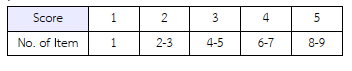
| Overall | 5 | |