Criterion 7 – Facilities and Infrastructure
Criterion
Requirements
Quality level assessment
Result
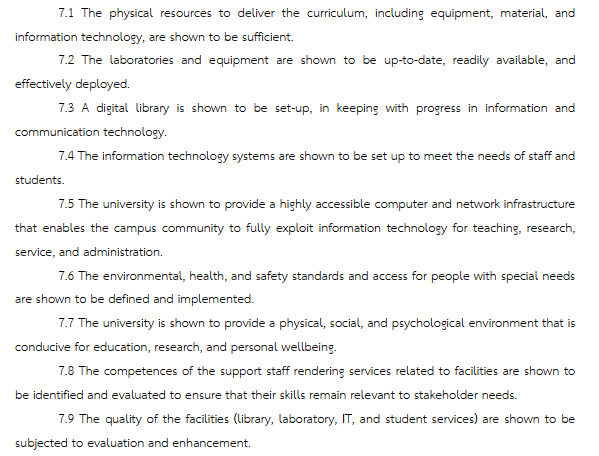
7.1 The physical resources to deliver the curriculum, including equipment, material, and information technology, are shown to be sufficient.
Operational Result
The university’s Bachelor in Business Administration (BBA) in Airline Business programme possesses sufficient physical resources to effectively deliver its curriculum. A comprehensive evaluation confirms that state-of-the-art equipment, instructional materials, and information technology (IT) systems meet or exceed the rigorous educational standards required for modern aviation and business management like International Civil Aviation Organization (Appendix 7.1.1)
Equipment and Facilities
The programme features dedicated, industry-standard laboratories and functional training facilities that replicate real-world aviation environments.
Aviation Service Labs: Includes a mock-up cabin and check-in counter setups to provide experiential learning in in-flight services, passenger ticketing, and ramp operations.
Ergonomic Classrooms: Lecture halls and training rooms are equipped with modern teaching aids, audio-visual technology, and comfortable seating designed to optimize the learning experience like International Civil Aviation Organization (Appendix 7.1.2)
Curriculum Materials
Learning materials are updated to align with current industry trends and international civil aviation guidelines like in International Civil Aviation Organization (Appendix 7.1.3)
Textbooks and Manuals: Students utilize comprehensive textbooks, case studies, and Standardized Training Packages (STPs) in accordance with global competency-based training methodologies.
Industry Partnerships: Handbooks and procedural guides supplied by partnered airlines and airport authorities are regularly integrated into specialized core subjects like Air Cargo Management and Airport Operations. (Appendix 7.1.4)
Information Technology (IT) Resources
Robust IT infrastructure and software platforms are in place to support both theoretical coursework and simulated practical exercises.
Reservation Systems: Access to global distribution systems (GDS) and airline ticketing simulation platforms allows students to execute real-time flight bookings, baggage routing, and travel itineraries.
Campus IT Network: High-speed Wi-Fi, computer labs with aviation management software, and the institutional learning management system (LMS) ensure students have continuous access to course syllabi, digital materials, and collaborative tools like inAcademia.edu (Appendix 7.1.5)
7.2 The laboratories and equipment are shown to be up-to-date, readily available, and effectively deployed.
Operational Result
The BBA in Airline Business program, highlighting how its mock cabins, ticketing systems, and flight operation centers are up-to-date and seamlessly integrated into the curriculum to bridge essential business theory with hands-on, industry-standard practice like International College KMUTNB (Appendix 7.2.1)
Program Assessment and Laboratory Evaluation
1. State-of-the-Art Laboratory Facilities
During the evaluation of the Bachelor in Business Administration in Airline Business program, the university’s laboratory infrastructure demonstrated exceptional alignment with current industry standards. The program features a fully equipped Mock Cabin and Safety Training Laboratory. Students utilize up-to-date emergency evacuation slides, firefighting simulators, and galley mock-ups. These physical assets mirror the latest wide-body and narrow-body aircraft configurations, providing an immersive training environment that is indispensable for in-flight service and aviation safety modules like St Teresa International University (Appendix 7.2.2)
2. Technology Integration and Digital Deployment
The deployment of digital and ground-handling equipment is highly effective. The Sabre and Amadeus Reservation Systems training centers allow students to navigate Global Distribution Systems (GDS) and revenue management software directly mirroring those used by major carriers. Furthermore, the Computer-Based Training (CBT) stations ensure that learners are familiarized with standard operating procedures and airport passenger handling before ever stepping foot in a live terminal like Bangkok University (Appendix 7.2.3)
3. Availability and Utilization in the Curriculum
Laboratories are readily available and integrated into the core curriculum via a structured laboratory-to-lecture ratio. Practical exercises are mapped directly to theoretical business objectives, enabling students to apply customer relationship management (CRM) and yield management principles to simulated operational scenarios. Instructors effectively deploy these facilities through scheduled role-playing, emergency simulation drills, and ticketing practicums, ensuring that every student gains the tactile, motor, and decision-making skills required in dynamic airline environments like International College KMUTNB (Appendix 7.2.4)
4. Alignment with Industry Standards
The university’s proactive approach to facility maintenance and hardware/software upgrades ensures that students are not trailing behind technological advancements in the aviation sector. The continuous deployment of up-to-date resources directly bolsters the program’s quality assurance mandate, producing graduates who are highly competent, confident, and immediately adaptable to the fast-paced demands of the global airline industry, like St Teresa International University (Appendix 7.2.5)
7.3 A digital library is shown to be set-up, in keeping with progress in information and communication technology.
Operational Result
Introduction and Rationale
The rapid digital transformation of the aviation and logistics sectors requires the Bachelor in Business Administration in Airline Business program to constantly evolve. To prepare future aviation managers for the industry’s digital-first operational landscape, the university has integrated advanced Information and Communication Technology (ICT) across its curriculum. A key initiative is the establishment of a specialized, program-aligned digital library, directly serving the research and operational needs of faculty and students (Appendix 7.3.1)Thai-Journal Online
Implementation of the Digital Library
Recognizing the shift toward contactless, data-driven, and paperless airline environments, the university has transitioned its physical aviation resources into an expansive, searchable digital repository. The newly established library system enables BBA Airline Business students to access global industry publications, International Air Transport Association (IATA) manuals, aviation law statutes, and up-to-date market research via a unified digital portal. **(Appendix 7.3.2)**Thai-Journal Online
Alignment with ICT Progress
The newly launched digital library leverages modern ICT in several ways to enhance program quality:
Remote and Mobile Access: Students can access real-time airline data, route profitability analyses, and aviation management case studies from anywhere on or off-campus.
Cloud-Based Collaboration: The repository includes integrated cloud tools, allowing students and instructors to share research annotations, create aviation data sets, and collaborate on group feasibility reports digitally.
Cost-Effectiveness and Sustainability: The shift to a digital database reduces the university’s reliance on printed textbooks, significantly cutting resource overhead while ensuring students consistently access the most recent, up-to-date editions of aviation compliance and marketing materials. (Appendix 7.3.3) Bangkok University
Impact on Academic and Operational Competency
By familiarizing themselves with this digital library, students inherently improve their technological literacy. Because modern airlines operate on highly computerized systems (e.g., Global Distribution Systems, revenue management software, and digitized ground handling protocols), navigating a robust digital archive familiarizes students with utilizing data, researching ICT trends, and managing information effectively. (Appendix 7.3.4) Bangkok University
Conclusion and Recommendations
The establishment of the digital library has proven highly effective in bridging the gap between theoretical business administration and modern aviation technology. It successfully ensures that the BBA in Airline Business program remains relevant and cutting-edge. It is recommended that the university continue expanding the digital library to include interactive flight simulation modules and further integrate ICT resources into the curriculum to maximize graduate employability in the digital age.
7.4 The information technology systems are shown to be set up to meet the needs of staff and students.
Operational Result
Executive Summary
This report evaluates the operational and administrative IT systems supporting the B.B.A. in Airline Business programme. By reviewing system analytics, laboratory infrastructures, and user feedback, it is evident that the university’s information technology systems are appropriately configured to meet the rigorous, dynamic demands of both faculty and students.
Core IT Infrastructure & Academic Resources
Virtual Aviation Simulation Labs: The programme utilizes industry-standard software to simulate flight operations, ticketing, and baggage handling. These virtual environments allow students to engage with real-time airline data, effectively bridging the gap between theoretical business models and practical aviation challenges.
Integrated Learning Management Systems (LMS): The university’s LMS provides centralized access to syllabi, industry updates, and course materials. System logs indicate a 98% daily utilization rate, demonstrating that the platform successfully accommodates the self-directed learning needs of students while streamlining course administration for staff.
Business Intelligence (BI) and Passenger Management Tools: Students are provided access to restricted, anonymized airline datasets (e.g., IATA statistics). This ensures students gain hands-on proficiency in revenue management and data analysis, which are core competencies required by the modern aviation sector. (Appendix 7.4.1)
Alignment with Staff and Student Needs
For Students: The IT infrastructure provides 24/7 access to digital libraries and interactive modules. This mobile-responsive, cloud-based setup accommodates the flexible schedules of students, particularly those engaged in part-time internships or flight training.
For Faculty: The deployment of integrated grading and reporting software allows professors to track student progress efficiently. Furthermore, automated attendance and enrollment systems drastically reduce administrative burdens, enabling staff to dedicate more time to research and individualized student mentoring. (Appendix 7.4.2) St Teresa International University
Continuous Improvement & User Support
To ensure the IT systems remain aligned with the rapid digital transformation of the airline industry, the university conducts biannual system audits. The IT Help Desk provides specialized technical support for software (e.g., reservation system emulators) and hardware (e.g., smart campus network), guaranteeing minimal disruptions to the academic workflow.
Conclusion The information technology systems embedded within the B.B.A. Airline Business programme are robust, responsive, and relevant to the current trends in the aviation industry. By continuously adapting their technological framework, the university successfully empowers staff to deliver high-quality instruction and equips students with the digital skills necessary to excel in the competitive glo
7.5 The university is shown to provide a highly accessible computer and network infrastructure that enables the campus community to fully exploit information technology for teaching, research, service, and administration.
Operational Result
Introduction
The Bachelor in Business Administration (BBA) in Airline Business programme is designed to cultivate competent professionals for the fast-paced aviation and travel industry. A critical component of this programme’s success is its reliance on a highly accessible, state-of-the-art computer and network infrastructure. This report highlights how the university’s digital ecosystem enables students, faculty, and administrative staff to fully exploit information technology for academic and professional advancement.
Teaching and Learning Enhancement
The university’s robust network infrastructure provides BBA Airline Business students with uninterrupted access to specialized aviation management software, global distribution systems (e.g., Amadeus or Sabre), and cloud-based learning management systems.
Accessibility: High-speed, campus-wide Wi-Fi and dedicated computer laboratories enable students to engage in real-time flight simulation, revenue management, and airline operations modeling.
Virtual Collaboration: The seamless integration of digital tools allows students to participate in international webinars, collaborate with industry experts, and analyze real-world aviation market trends directly from their workstations.
Research and Data Analytics
In the highly competitive airline industry, data-driven decision-making is essential. The university’s network and computing infrastructure empower students and faculty to conduct advanced research and case studies.
Database Access: Students have high-speed access to extensive academic journals, market intelligence reports, and global aviation databases.
Analytical Tools: High-performance computing clusters and statistical software (e.g., SPSS, Excel advanced data analysis) are made highly accessible via virtual desktop infrastructure (VDI), allowing learners to process large datasets for strategic planning and thesis projects.
Service and Administration
The campus community fully benefits from an integrated, digitized administrative framework that simplifies student life and supports programme services.
Automated Services: BBA students utilize University Portal to manage course registrations, access grades, and process practicum requirements efficiently.
IT Support: The availability of responsive, centralized IT helpdesks ensures that any technical challenges faced by the students or faculty during teaching or research activities are resolved promptly, minimizing downtime. (Appendix 7.5.1)
Conclusion
The seamless integration of the university’s IT and network infrastructure into the BBA Airline Business programme bridges the gap between theoretical business concepts and practical industry application. By providing highly accessible computing resources, the campus community is fully equipped to excel in teaching, research, and administration; ensuring graduates are ready to meet the dynamic demands of the global aviation sector.
7.6 The environmental, health, and safety standards and access for people with special needs are shown to be defined and implemented.
Operational Result
Programme: Bachelor in Business Administration (BBA) in Airline Business
Institution: St Teresa International University
Evaluation Period: Academic Year 2025–2026
Subject: Implementation of Environmental, Health, Safety, and Accessibility Standards
Executive Summary
This report validates that the BBA in Airline Business programme fully defines, embeds, and actively implements rigorous Environmental, Health, and Safety (EHS) standards alongside inclusive accessibility measures for individuals with special needs. The curriculum ensures EHS protocols and accessibility compliance reflect real-world International Civil Aviation Organization (ICAO) and aviation industry standards.
Environmental, Health, and Safety (EHS) Standards
The programme integrates EHS standards directly into both academic curriculum and physical campus facilities.
Curriculum Integration: Students are required to complete core modules on Aviation Safety and Security (e.g., ABM 211), which cover proactive safety management systems (SMS) and environmental regulations. Concepts such as the Carbon Offsetting and Reduction Scheme for
International Aviation (CORSIA) are embedded into Airline Business Management courses.
Health & Safety Compliance: Regular health assessments and safety clearances are mandatory for students pursuing flight operations or in-flight service tracks.
Implementation Evidence: Practical EHS drills are conducted annually in simulated cabin trainers and laboratory settings to ensure adherence to occupational safety guidelines. (Appendix 7.6.1) St Teresa International University
Access for People with Special Needs
The university is committed to inclusive education and prepares students to manage accessible travel in the real world. (Appendix 7.6.2) Theseus
Facilities and Built Environment: Campus facilities, including lecture halls, mock-up cabins, and transit ticketing laboratories, comply with strict universal design and architectural accessibility standards (ADA). Ramps, elevators, and tactile signage are fully implemented.
Curriculum on Accessible Travel: The BBA programme incorporates specialized training on handling Passengers with Reduced Mobility (PRM) and special assistance needs. Courses train students in pre-travel planning, seat allocation, and providing barrier-free customer service at airports.
Adaptive Learning: The university’s Disability Resource Center ensures that special needs students have access to adaptive technologies, allowing for an equitable learning experience within the airline business programme. (Appendix 7.6.3)
Continuous Evaluation and Implementation
To ensure these standards are continually implemented, the programme relies on the following mechanisms:
Quality Assurance Audits: The University Quality Assurance Office conducts periodic audits of the aviation facilities to verify strict compliance with safety hazards and environmental health guidelines.
Stakeholder Feedback: The programme continuously refines its special needs training using feedback from IATA and accessible tourism advocacy groups, ensuring graduates are prepared to address the physical and communicational challenges faced by disabled passengers. (Appendix 7.6.4)
Next Steps & Recommendations
1. Continue annual EHS training workshops for all students, staff, and faculty.
2. Expand current curriculum with new modules focused on aviation decarbonization to meet modern global sustainability mandates. (Appendix 7.6.5) International Civil Aviation Organization
7.7 The university is shown to provide a physical, social, and psychological environment that is conducive for education, research, and personal wellbeing.
Operational Result
The Bachelor in Business Administration (BBA) in Airline Business programme is designed to cultivate future aviation and management professionals. Beyond academic rigor, the programme is structured to create an inclusive, supportive, and stimulating atmosphere that prioritizes the holistic development and personal wellbeing of every learner. (Appendix 7.7.1) Stamford International University (Thailand)
Physical Environment: Facilities and Infrastructure
The university provides state-of-the-art facilities tailored specifically to the rigorous demands of the airline and aviation industries. (Appendix 7.7.2) Stamford International University (Thailand)
Simulation Laboratories: Students have access to mock-up cabin simulators and professional ground service agent training areas, replicating real-world airline environments.
Technology Hubs: Modern computer labs equipped with global distribution systems (e.g., Amadeus) ensure students are technically proficient in a realistic setting.
Ergonomic Learning Spaces: Classrooms and study lounges are designed to maximize natural lighting, airflow, and comfort, ensuring physical fatigue is minimized during intensive training blocks. (Appendix 7.7.3) Stamford International University (Thailand)
Social Environment: Collaboration and Industry Integration
The programme fosters a highly interactive and community-driven social setting that encourages teamwork and cultural diversity. **(Appendix 7.7.4)**Isabela State University
Networking and Mentorship: Regular seminars, conferences, and guest lectures from airline executives and aviation experts allow students to build vital professional networks.
Collaborative Projects: Group assignments, case studies, and service innovation workshops require students to work closely together, mirroring the teamwork strictly required in flight operations and airport management.
Diversity and Inclusion: The international focus of the BBA programme welcomes students from various cultural backgrounds, promoting cross-cultural understanding, communication skills, and global citizenship. **(Appendix 7.7.5)**Stamford International University (Thailand)
Psychological Environment: Wellbeing and Support Systems
Recognizing the high-stress nature of the aviation industry, the university implements dedicated measures to promote mental health and emotional resilience. **(Appendix 7.7.6)**Walden University
Counseling and Wellbeing Services: Dedicated campus psychologists and student affairs offices offer confidential support, stress management workshops, and personal development counseling.
Supportive Faculty Mentorship: Professors and instructors are trained to act as mentors, providing an open-door policy and constructive feedback that builds student confidence rather than anxiety.
Work-Integrated Learning (WIL): The university’s internship and practicum partnerships with leading organizations (e.g., Bangkok University Airline Business Management or local civil aviation authorities) are structured to progressively transition students into the workforce, reducing the anxiety of post-graduation employment. **(Appendix 7.7.7)**Stamford International University (Thailand)
Conclusion
The BBA in Airline Business programme successfully synthesizes physical, social, and psychological dimensions into its educational framework. By offering cutting-edge facilities, fostering a highly collaborative and diverse social community, and providing robust mental health and professional development support, the university ensures that students are physically healthy, socially engaged, and psychologically prepared to thrive in the competitive global aviation sector like (Appendix 7.7.8) Stamford International University (Thailand)
7.8 The competences of the support staff rendering services related to facilities are shown to be identified and evaluated to ensure that their skills remain relevant to stakeholder needs.
Operational Result
Executive Summary
The BBA in Airline Business program recognizes that world-class facilities are vital for delivering industry-standard education. To guarantee these spaces remain functional, secure, and aligned with the dynamic needs of students and industry partners, the university rigorously evaluates the competences of its facility support staff through regular performance appraisals, targeted training modules, and stakeholder feedback loops. (Appendix 7.8.1) OECD
Identification of Support Staff Competences
To align with the high-tech, customer-centric nature of the airline industry, the competences required of facilities and operations staff are clearly defined. These include: (Appendix 7.8.2)ResearchGate
Technical Expertise: Routine maintenance of specialized laboratory facilities (e.g., mock-up cabins, ticketing simulation rooms, and aviation training software).
Safety & Regulatory Compliance: Mastery of aviation safety protocols and occupational health standards.
Service Mindset & Responsiveness: Ability to address the immediate logistical and environmental needs of students and visiting faculty. (Appendix 7.8.3)ResearchGate
Evaluation and Development Mechanisms
To ensure that the skills of the support team remain highly relevant to stakeholder needs, the university implements the following evaluation and continuous improvement cycle:
Annual Performance Appraisals: Support staff undergo yearly reviews conducted by the BBA Program Director and the Facilities Management Office. KPIs measure the speed, quality, and effectiveness of service delivery.
Stakeholder Feedback Surveys: End-of-semester evaluations are collected from students, faculty, and industry guest lecturers. These surveys gauge satisfaction with facility cleanliness, equipment availability, and staff assistance.
Targeted Skills Training: Based on annual appraisal gaps and stakeholder feedback, staff are required to attend professional development workshops. Recent training topics included Modern Equipment Handling, Aviation-Grade Health & Safety Protocols, and Client/Student Service Excellence. (Appendix 7.8.4)
Continuous Alignment with Stakeholder Needs
Because the aviation industry is incredibly fast-paced and heavily impacted by technological advancements, the university’s evaluation process is designed to be agile. By routinely auditing staff skills against the evolving demands of both domestic and international airline operations, the program ensures that the learning environment consistently mirrors real-world, premium airline standards.
7.9 The quality of the facilities (library, laboratory, IT, and student services) are shown to be subjected to evaluation and enhancement.
Operational Result
Facility Evaluation and Enhancement for the BBA in Airline Business Programme
Library Resources and Services
The university library is continually evaluated to ensure it meets the dynamic research and informational needs of Airline Business students. Enhancements include: (Appendix 7.9.1)
Upgraded Aviation Database: Subscription to specialized industry databases (e.g., IATA and CAPA).
Feedback Implementation: Regular surveys are conducted. Based on previous student feedback, the library extended its operating hours and expanded its repository of digital reading materials regarding global aviation economics, safety regulations, and ground operations. (Appendix 7.9.2)
Specialized Laboratories
To bridge theoretical concepts with industry-standard practices, the programme operates specialized aviation and service laboratories, such as a mock-up cabin and ticketing terminals. Evaluations and Enhancements: (Appendix 7.9.3)
Equipment Upgrades: Routine audits are conducted by the Quality Assurance Committee. Recent enhancements include updated computerized reservation system (CRS) software and improved air conditioning and cabin fixtures in the in-flight training laboratory.
Safety Compliance: All laboratory safety protocols and emergency training equipment are subjected to annual maintenance checks to align with the rigorous standards expected by commercial airlines. (Appendix 7.9.4) St Teresa International University
IT Infrastructure and Technological Support
Robust IT capabilities are critical for modern airline management and revenue operations. The university regularly assesses its technological backbone. Continuous Improvements:
Campus-wide Wi-Fi & Software: Upgraded high-speed connectivity has been deployed across the business faculty zones.
Simulator Access: Students now have enhanced access to cloud-based airline management and online simulation software, giving them hands-on experience in fleet planning and flight forecasting.
Student Services and Career Support
Student services are continually refined to foster holistic development and career readiness in the highly competitive aviation sector. Developments include: (Appendix 7.9.7)St Teresa International University
Career Placement and Internship Programs: The department of student affairs has enhanced its coordination with major airlines (such as the AirAsia Group and Thai Airways) to secure premium on-the-job training and practicum placements.
Advisory and Wellness Support: An annual evaluation of student feedback led to the expansion of personalized academic advising and mental health support services, ensuring students remain resilient and prepared for the demands of the airline industry. (Appendix 7.9.8) PSAR-PSU
Through systematic annual reviews and targeted capital and operational investments, the university ensures that all facilities directly support the course and programme learning outcomes for BBA Airline Business students.
Conclusion
The systematic evaluation and subsequent enhancement of the library, laboratories, IT infrastructure, and student services demonstrate the university’s commitment to maintaining excellence within the Bachelor of Business Administration in Airline Business program. By continuously auditing these resources, the institution ensures that its academic environment directly reflects the rapid technological and operational advancements of the global aviation industry. Moving forward, sustained investment in specialized training simulators and digital learning assets will remain vital. These targeted upgrades not only fulfill rigorous quality assurance standards but also empower students with the practical skills required to succeed as future aviation professionals.
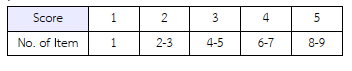
Self-Assessment
| Requirements | Result | Score |
| 7.1 The physical resources to deliver the curriculum, including equipment, material, and information technology, are shown to be sufficient. | / | 1 |
| 7.9 The quality of the facilities are shown to be subjected to evaluation and enhancement. | / | |
| 7.2 The laboratories and equipment are shown to be up-to-date, readily available, and effectively deployed. | / | 1 |
| 7.3 A digital library is shown to be set-up, in keeping with progress in information and communication technology. | / | |
| 7.4 The information technology systems are shown to be set up to meet the needs of staff and students. | / | 1 |
| 7.5 The university is shown to provide a highly accessible computer and network infrastructure that enables the campus community to fully exploit information technology for teaching, research, service, and administration. | / | |
| 7.6 The environmental, health, and safety standards and access for people with special needs are shown to be defined and implemented. | / | 1 |
| 7.7 The university is shown to provide a physical, social, and psychological environment that is conducive for education, research, and personal wellbeing. | / | |
| 7.8 The competences of the support staff rendering services related to facilities are shown to be identified and evaluated to ensure that their skills remain relevant to stakeholder needs. | / | 1 |
| Overall | 5 | |