Criterion 7 – Facilities and Infrastructure
Criterion
Requirements
Quality level assessment
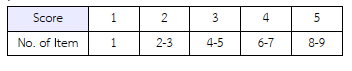
Result
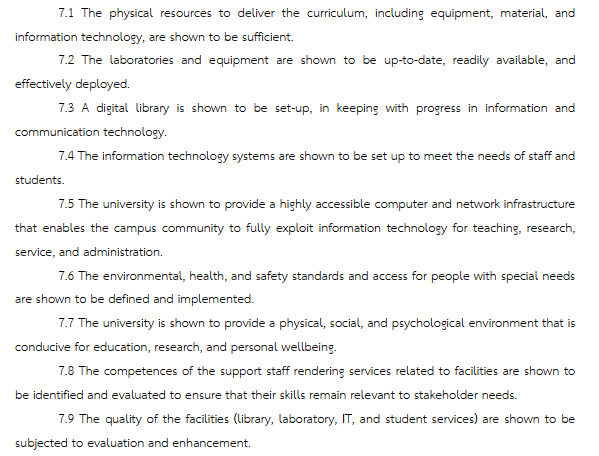
7.1 The physical resources to deliver the curriculum, including equipment, material, and information technology, are shown to be sufficient.
Operational Result
The university and the program collaboratively plan and allocate the physical resources and shared facilities required to effectively support curriculum implementation. This includes ensuring the availability of adequate equipment, learning materials, and information technology resources necessary to enhance teaching, learning, and research activities.
To strengthen academic support services, the Faculty of Education has established an Academic and Educational Technology Center, which provides books, academic publications, and research materials in the fields of education and educational administration. These resources are available for use by both faculty members and students to support academic study and research activities. In addition, the center is equipped with computers, high-speed internet connectivity, projectors, and various audiovisual facilities that facilitate student research, collaborative learning, and group seminar activities. These services are located in Room 409, 4th Floor, Administration Building, offering an accessible and supportive environment for academic engagement and scholarly development.
7.2 The laboratories and equipment are shown to be up-to-date, readily available, and effectively deployed.
Operational Result
The program utilizes a range of laboratory facilities, including computer laboratories, to support teaching, learning, and research activities. In addition, comprehensive information technology support and consultation services are provided to both students and staff to facilitate effective use of educational technologies. These services include technical assistance in the use of Google Classroom, support for the development and production of digital learning media, and guidance in other technology-related areas. Such initiatives enhance the integration of technology into academic and administrative processes while promoting an effective and modern learning environment.
7.3 A digital library is shown to be set-up, in keeping with progress in information and communication technology.
Operational Result
The program utilizes a digital library system that effectively supports the academic needs of both students and instructors while keeping pace with developments in information and communication technology. The library provides access to a comprehensive collection of current and relevant online resources, including e-books, e-journals, and e-theses, enabling users to access a wide range of academic and research materials. This digital platform enhances learning, teaching, and research activities by ensuring convenient and timely access to updated scholarly information.
7.4 The information technology systems are shown to be set up to meet the needs of staff and students.
Operational Result
The university has a central support unit, the Information Technology Department, which is responsible for providing and managing a variety of information technology systems and services to meet the needs of faculty members, staff, and students. These technological resources are designed to support academic, administrative, and operational functions, ensuring efficient access to digital tools and enhancing the overall teaching, learning, and working environment within the university.
7.5 The university is shown to provide a highly accessible computer and network infrastructure that enables the campus community to fully exploit information technology for teaching, research, service, and administration.
Operational Result
The university provides adequate computer facilities and accessible network infrastructure to support the needs of the academic community. These resources enable faculty members, staff, and students to effectively utilize information technology in teaching, research, academic services, and administrative operations, thereby enhancing efficiency, connectivity, and the overall quality of educational and institutional activities.
7.6 The environmental, health, and safety standards and access for people with special needs are shown to be defined and implemented.
Operational Result
The university develops and maintains its campus environment for faculty members, staff, and students in accordance with the policies and regulations established by the Ministry of Natural Resources and Environment. These initiatives are designed to promote a safe, sustainable, and conducive learning and working environment.
In addition, the university prioritizes campus security by engaging professional security service providers to install and maintain CCTV surveillance systems across strategic locations throughout the campus. These systems are utilized to monitor general activities and strengthen safety measures, ensuring the security and well-being of faculty members, staff, and students during their time within the university premises.
7.7 The university is shown to provide a physical, social, and psychological environment that is conducive for education, research, and personal wellbeing.
Operational Result
The university provides a range of facilities and support services designed to enhance students’ learning experiences and promote the well-being of both students and staff. These include shops and service areas offering food, beverages, and other essential items that support educational activities and daily needs. Such facilities contribute to a supportive academic environment by assisting students in their research activities, thesis development, and overall quality of campus life.
In addition, the university fosters a conducive physical, social, and psychological environment by providing various recreational and wellness facilities, including a gymnasium, swimming pool, relaxation gardens, club rooms, and student activity areas that are accessible to all faculties. To ensure a comfortable and healthy environment, regular cleaning and maintenance activities are carried out to maintain cleanliness, orderliness, and the overall quality of campus facilities.
7.8 The competences of the support staff rendering services related to facilities are shown to be identified and evaluated to ensure that their skills remain relevant to stakeholder needs.
Operational Result
Development of Competencies for Staff in the Faculty of Education
The Faculty of Education places significant emphasis on the continuous development of staff competencies to ensure effective service delivery and operational excellence. Staff performance related to support and service functions is evaluated twice annually through the Key Performance Indicator (KPI) system, which assesses work performance and observed behavioral competencies. In addition, needs assessments are conducted to establish Individual Development Plans (IDPs) that guide the enhancement of staff skills, knowledge, abilities, and professional experiences relevant to their assigned responsibilities.
Staff members are expected to perform their duties with diligence and professionalism, particularly in handling urgent tasks, while upholding principles of honesty, integrity, accountability, and responsibility. The faculty also ensures that an adequate number of staff members are available to effectively support faculty operations and respond to the needs of clients and stakeholders.
Furthermore, staff demonstrate strong interpersonal and communication skills in their interactions with faculty members and students and provide efficient, responsive, and timely services to visiting departments and stakeholders. Support services are delivered comprehensively to students, faculty members, and staff to maintain a productive academic environment.
To further strengthen service quality, the faculty clearly identifies and establishes the essential competencies required for each role based on the nature of the services provided and the support required for facilities and operations. This competency-based approach helps ensure that staff members are equipped to effectively meet institutional and stakeholder needs.
7.9 The quality of the facilities (library, laboratory, IT, and student services) are shown to be subjected to evaluation and enhancement.
Operational Result
- The effectiveness and performance of each service area are evaluated through regular satisfaction surveys administered to service recipients, including students, faculty members, and coordinating personnel, at the end of each academic year. This assessment process enables the program to gather feedback and determine the quality, efficiency, and responsiveness of the services provided.
- The collected data are systematically analyzed and utilized as a basis for planning and developing improvement strategies for service delivery in the succeeding academic year. This continuous improvement process supports the enhancement of service quality and ensures that services remain responsive to the needs and expectations of stakeholders.
Evidence
Self-Assessment
| Requirements | Result | Score |
| 7.1 The physical resources to deliver the curriculum, including equipment, material, and information technology, are shown to be sufficient. | / | 1 |
| 7.9 The quality of the facilities are shown to be subjected to evaluation and enhancement. | / | |
| 7.2 The laboratories and equipment are shown to be up-to-date, readily available, and effectively deployed. | / | 1 |
| 7.3 A digital library is shown to be set-up, in keeping with progress in information and communication technology. | / | |
| 7.4 The information technology systems are shown to be set up to meet the needs of staff and students. | / | 1 |
| 7.5 The university is shown to provide a highly accessible computer and network infrastructure that enables the campus community to fully exploit information technology for teaching, research, service, and administration. | / | |
| 7.6 The environmental, health, and safety standards and access for people with special needs are shown to be defined and implemented. | / | 1 |
| 7.7 The university is shown to provide a physical, social, and psychological environment that is conducive for education, research, and personal wellbeing. | / | |
| 7.8 The competences of the support staff rendering services related to facilities are shown to be identified and evaluated to ensure that their skills remain relevant to stakeholder needs. | / | 1 |
| Overall | 5 | |